
What triggered the notices
The Food Safety and Standards Authority of India has issued notices to over 14 food brands for claims the regulator considers misleading or non-compliant with labelling standards. The enforcement action targets some of the country's most recognizable names: Ferrero, Marico, Saffola, Lotte India, Ferns N Petals, Kubera Foods, Raw Pressery, Kinder Joy, and Pluckk are among the companies that received formal notices.
The scrutiny spans product categories many households buy regularly—paneer, chocolate spreads, and energy drinks. FSSAI's concern centers on misleading health claims and labelling violations, the kind of language that shapes purchasing decisions at the shelf.
These are not food safety alerts. No contamination or immediate health risk has been identified. The regulator is challenging how these products are marketed, not whether they're safe to eat.
The claim types under scrutiny
While the exact wording of challenged claims varies by product and hasn't been detailed in public disclosures, the enforcement action points to familiar patterns in food marketing.
Health halo language—terms like "natural," "wholesome," or "nutritious"—often appears on packs without meeting any regulatory threshold. These words suggest virtue but may not correspond to substantiated nutritional benefits under FSSAI standards.
Nutritional superiority claims present another category of concern. When a product declares itself "high in protein" or "low in sugar," FSSAI has specific numerical criteria that must be met. A claim that sounds definitive may not meet those thresholds, yet it still influences what goes into shopping carts.
Implied health benefits—phrases like "supports immunity" or "boosts energy"—occupy a gray zone. They suggest physiological effects without making explicit medical claims, but FSSAI's labelling rules restrict such language unless it's backed by permitted nutrient function claims.
These distinctions matter because front-of-pack language is designed to be persuasive. When that persuasion isn't backed by regulatory standards, the gap between marketing and reality widens.
What remains unknown
Legal outcomes and penalties are pending. These are initial notices, not final determinations. Whether products will be pulled from shelves, reformulated, or simply relabelled remains to be seen.
The full list of 14-plus brands has not been disclosed. The names that have surfaced represent a subset of the enforcement action, not its entirety.
The specific wording of the claims under challenge isn't available in the public domain. What we know is the regulatory concern—misleading health claims and labelling violations—not the precise phrases that triggered scrutiny for each product.
How to read your current packs with the same skepticism
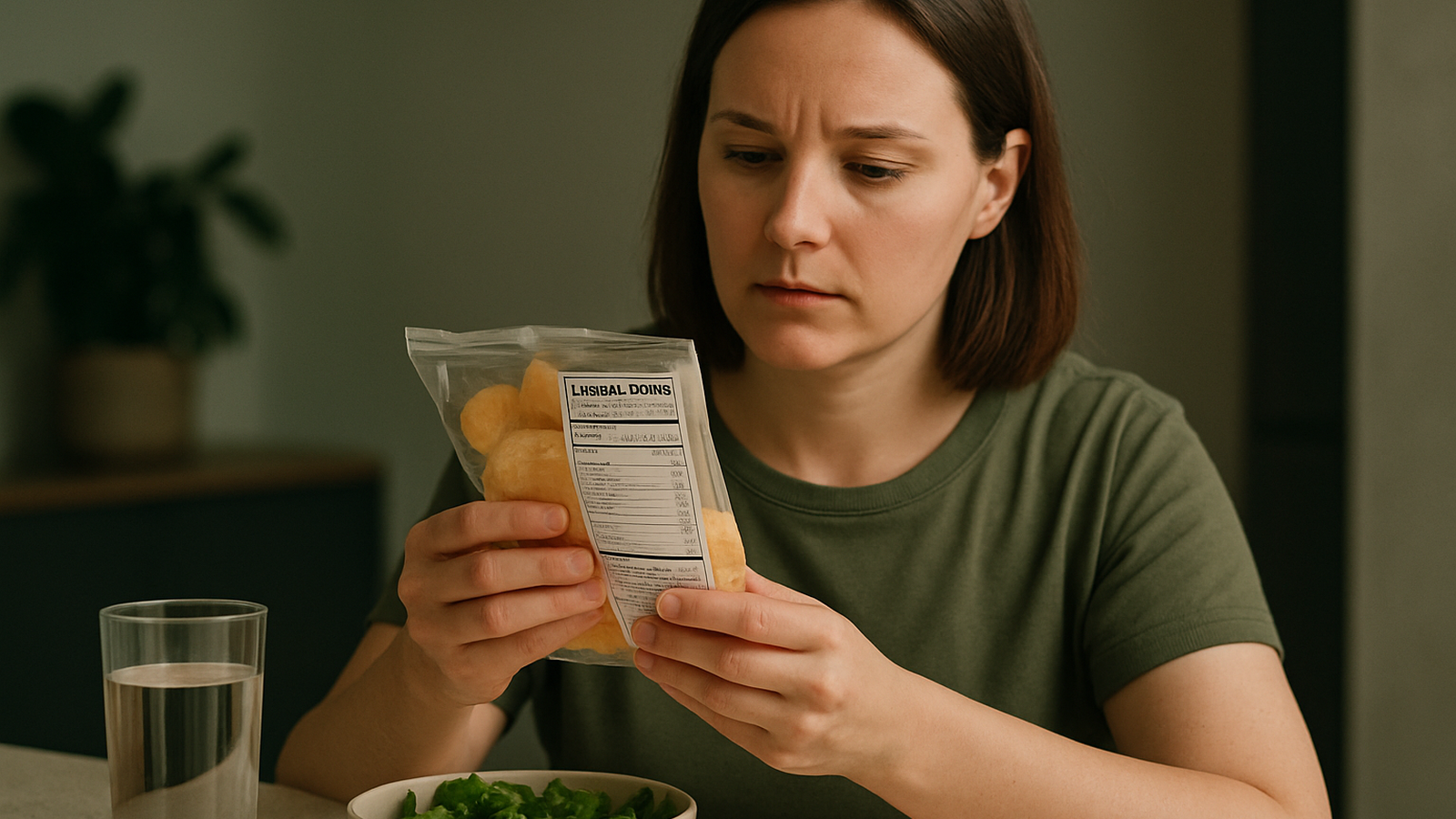
You can apply the regulator's lens to products already in your pantry. Start with vague health language. If a pack says "supports immunity" or "boosts energy" without pointing to specific nutrients or amounts, ask what that claim is based on. FSSAI permits certain nutrient function claims, but broad wellness promises often fall outside those boundaries.
Check whether "high in X" or "low in Y" claims align with the numbers on the nutrition facts panel. FSSAI defines "high in protein" as at least 10 grams per 100 grams for solids, for instance. If a product makes that claim but delivers less, the label doesn't hold up.
Be wary of front-of-pack imagery. Pictures of fruits, whole grains, or fresh ingredients create an impression of wholesomeness, but the ingredient list tells a different story. If the image shows strawberries and the ingredient list leads with sugar and refined flour, the visual is doing more work than the formulation.
Cross-reference claims with ingredient order. Ingredients are listed by weight, descending. If a pack emphasizes its "real fruit" content but fruit appears near the end of the list, the claim is technically true but practically misleading.
Recognize that FSSAI approval doesn't validate every marketing phrase on the pack. A product can be legally sold and still carry claims that overstate its nutritional profile. Regulatory oversight is not the same as a guarantee that every word on the label is accurate.
What this enforcement does—and doesn't—solve
This action targets a subset of brands. Many others use similar language and haven't received notices, either because they haven't been reviewed yet or because regulatory capacity limits how many brands can be scrutinized at once.
Enforcement is reactive, not preventive. The products in question are already on shelves. Notices are issued after the fact, which means households have been buying these items under the influence of claims the regulator now questions.
Regulatory capacity constrains how comprehensive this effort can be. FSSAI oversees a vast and fragmented food industry. Issuing 14-plus notices is significant, but it's a fraction of the market where similar claim types appear.
Reader vigilance remains necessary even after enforcement actions. The crackdown signals stricter scrutiny, but it doesn't solve the broader problem of misleading claims across the market. You still need to read labels skeptically.
If you have these products at home
No safety risk has been identified. These are labelling violations, not contamination events. You can continue using the product while outcomes are pending.
Read the nutrition facts panel and ingredient list, not just front-of-pack claims. The panel gives you the numbers—grams of protein, sugar, sodium—that marketing language obscures. The ingredient list shows you what's actually in the package, in order of predominance.
Don't assume all products from a named brand are misleading. The notices are product-specific. A brand receiving a notice for one item doesn't mean its entire portfolio is under scrutiny or non-compliant.
If a product's claims shaped why you bought it—if you chose it because the pack said "high in protein" or "natural"—check whether the nutrition panel supports that decision. If it doesn't, you have information to guide your next purchase. If it does, the claim may have been accurate even if the regulator is questioning how it was presented.
The enforcement action is a reminder that marketing and nutrition are not the same thing. The former is designed to persuade; the latter is a matter of measurement. Learning to separate the two is the most reliable defense against misleading claims, whether or not enforcement ever catches up.
Common health claims on packs—and what to check
Comparison basis: Per 100g for solids; check individual pack labels for liquids and per-serving values
| Claim type | Example wording | What to verify | FSSAI threshold (if numeric) |
|---|---|---|---|
| High in protein | "High protein snack" | Nutrition panel: grams per 100g | ≥10g per 100g (solids) |
| Low in sugar | "Low sugar cereal" | Nutrition panel: grams per 100g | ≤5g per 100g (solids) |
| Natural / wholesome | "Made with natural ingredients" | Ingredient list: additives, preservatives | No defined threshold |
| Supports immunity | "Boosts your immunity" | Permitted nutrient function claims list | Must cite specific nutrient |
| Real fruit | "Contains real fruit" | Ingredient list: fruit position by weight | No minimum % required |
| Energy boost | "Gives you energy" | Nutrition panel: caffeine or sugar content | No defined threshold |
| No added sugar | "Sugar-free" or "No added sugar" | Ingredient list: sweeteners, fruit concentrates | Must be <0.5g per 100g |
FSSAI thresholds apply where specified. Vague claims like 'natural' or 'boosts energy' have no regulatory definition and require skeptical reading of ingredient lists and nutrition panels.















Comments
No login needed. Keep it kind — abusive language is filtered.