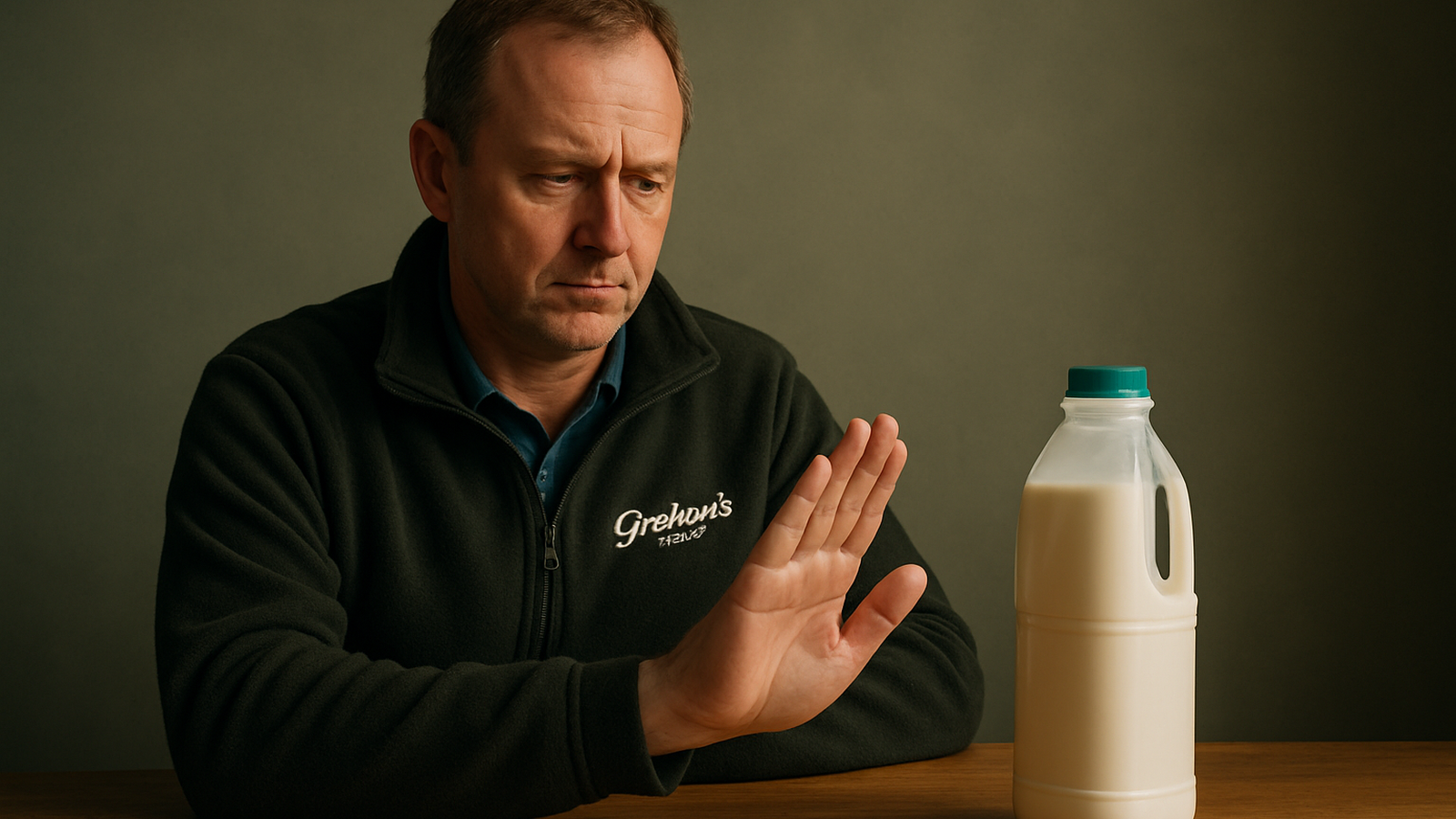
What Graham's has announced—and what's still missing
Graham's Family Dairy has initiated a precautionary recall of semi-skimmed milk due to the risk of penicillin contamination, but the company has not yet disclosed which batches are affected, their expiration dates, or where the milk was distributed. That means you cannot verify whether the carton in your fridge is part of the recall.
The recall is being characterized as a precautionary measure—a standard response when potential contamination is detected, not confirmation that anyone has been harmed. But without batch codes or sell-by dates, households are left waiting for the information they need to check their own supplies.
Why penicillin in milk matters—and who faces actual risk
Penicillin contamination in milk is primarily a concern for people with penicillin allergies. For this group, even trace amounts can trigger allergic reactions. If no one in your household has a penicillin allergy, the risk from these traces is not the same.
Antibiotic residues do not make milk generally unsafe for consumption in the way spoilage or pathogen contamination would. This is not a toxicity issue for the broader population, and it is not an antibiotic-resistance concern at the household level. The recall targets a specific hazard for a specific group: those allergic to penicillin.
Understanding this distinction helps you assess whether your household faces immediate risk or whether you're waiting on batch details as a matter of caution rather than urgency.
Where to find product codes when they're released
When Graham's or regulators publish the affected batch numbers, they will appear in predictable places. Check the Graham's Family Dairy website and contact their customer service line for the most direct updates. The Food Standards Agency or equivalent UK regulatory body will also post official recall details, including product codes and expiration dates.
If you purchased the milk from a major retailer, check that chain's website—many publish recall notices with specific product identification information. To identify whether you have Graham's semi-skimmed milk, look for the brand name and product type on the label. Semi-skimmed milk is the only product currently named in the recall.
What to do with Graham's semi-skimmed milk at home right now
If anyone in your household has a penicillin allergy, do not consume any Graham's semi-skimmed milk. Return it to the store for a refund or discard it. The risk to allergic individuals exists regardless of whether your specific batch has been confirmed.
If no one in your household has a penicillin allergy, you can hold the product until batch details are released and check whether yours is affected. Alternatively, return it now for a refund if you prefer not to wait. Retailers will accept returns for recalled products even without a receipt—this is standard practice in recall situations.
Do not assume that all Graham's milk is affected. Only semi-skimmed milk has been named, and even within that category, only certain batches are likely involved once codes are published.
What this single recall does not establish
This recall involves one company, one product, and one precautionary action. It does not indicate widespread antibiotic contamination in UK dairy or suggest that milk testing has failed across the industry. Other Graham's products are not implicated unless specifically named in future updates.
Precautionary recalls are standard risk management. They are issued when potential contamination is detected, not as proof that harm has occurred. The absence of batch-specific details at this stage does not mean the recall is disorganized—it means information is still being finalized.
This is not evidence that antibiotic contamination is common in milk. It is an isolated incident at a single dairy, and it does not reflect systemic supply failure.
How to track updates without refreshing news sites
Sign up for Food Standards Agency email alerts to receive official recall updates directly. If you have Graham's semi-skimmed milk at home, check the company's website once daily rather than repeatedly throughout the day.
If you purchased the milk using a retailer loyalty card, the store may contact you directly if purchase records link you to an affected batch. News outlets will report batch numbers once they are available, so a single check tomorrow or the day after is sufficient—you do not need to monitor constantly.
This approach ensures you receive critical information without the anxiety of compulsive checking. The batch codes will be published when they are ready, and one deliberate check will catch them.
Penicillin allergy: Common sources and cross-reaction risks
Comparison basis: Not applicable—allergy risk exists at any exposure level
| Source | Penicillin type or risk | Action if allergic |
|---|---|---|
| Prescribed penicillin antibiotics | Amoxicillin, ampicillin, penicillin V | Never take without confirming allergy status with doctor |
| Contaminated milk (this recall) | Trace penicillin residues | Do not consume—return or discard immediately |
| Other antibiotics (cephalosporins) | ~10% cross-reaction risk with penicillin allergy | Tell your doctor about penicillin allergy before taking |
| Blue cheese (Penicillium mould) | Different protein—rarely triggers penicillin allergy | Usually safe, but discuss with allergist if uncertain |
| Other dairy products | No penicillin unless contaminated | Check for recalls; standard dairy is safe |
| Prescribed non-penicillin antibiotics | No penicillin (e.g., azithromycin, ciprofloxacin) | Generally safe for penicillin-allergic individuals |
Penicillin allergy severity varies. Always inform healthcare providers of your allergy status before taking any antibiotic. Cross-reaction risks are approximate and individual responses differ.





Comments
No login needed. Keep it kind — abusive language is filtered.