The media frame gaining traction—and the diagnosis that doesn't exist
Studies have suggested that ultraprocessed food addiction may be prevalent in older adults. Research has explored the association between food addiction symptoms and BMI-for-age in children. Some media reports compare the addictive qualities of ultraprocessed foods to those of tobacco.
Yet the term "ultraprocessed food addiction" does not appear in the DSM-5 or the ICD-11, the two major psychiatric diagnostic manuals used worldwide. It is not a recognized clinical diagnosis.
Current news coverage does not establish a consensus on whether "addiction" is the scientifically accurate framework for describing hyper-palatable food consumption. The question facing households is not whether a psychiatric label applies, but whether you can identify and reduce these foods without waiting for academic consensus. You can.
What researchers are actually measuring when they study 'food addiction symptoms'
When studies reference "food addiction symptoms," they're capturing behaviors through symptom inventories: loss of control around certain foods, intense cravings, continued consumption despite physical or emotional harm, unsuccessful attempts to cut back, and eating larger amounts than intended.
Researchers measure these patterns using questionnaires that ask about frequency and severity. Participants might report eating past the point of discomfort, feeling unable to stop once they start, or organizing their day around obtaining specific foods.
Observing these behaviors does not establish a clinical diagnosis. The presence of symptoms in a research context differs fundamentally from the existence of a recognized clinical entity. While some scientists argue that these patterns meet criteria used to define substance addiction, others reject the framework entirely. Food is essential for survival, consumption is context-dependent, and eating involves complex social and cultural dimensions that don't map neatly onto substance use disorders.
The contested nature of the addiction framework for food means that symptom inventories capture real experiences without settling whether "addiction" is the right word.
What 'ultraprocessed' means—and how to find it on your shelf
The NOVA classification defines ultraprocessed foods as industrial formulations typically containing five or more ingredients, including substances not used in home kitchens. These are products made primarily from ingredients extracted or derived from foods—oils, fats, sugars, starches, proteins—plus additives that enhance palatability, appearance, or shelf life.
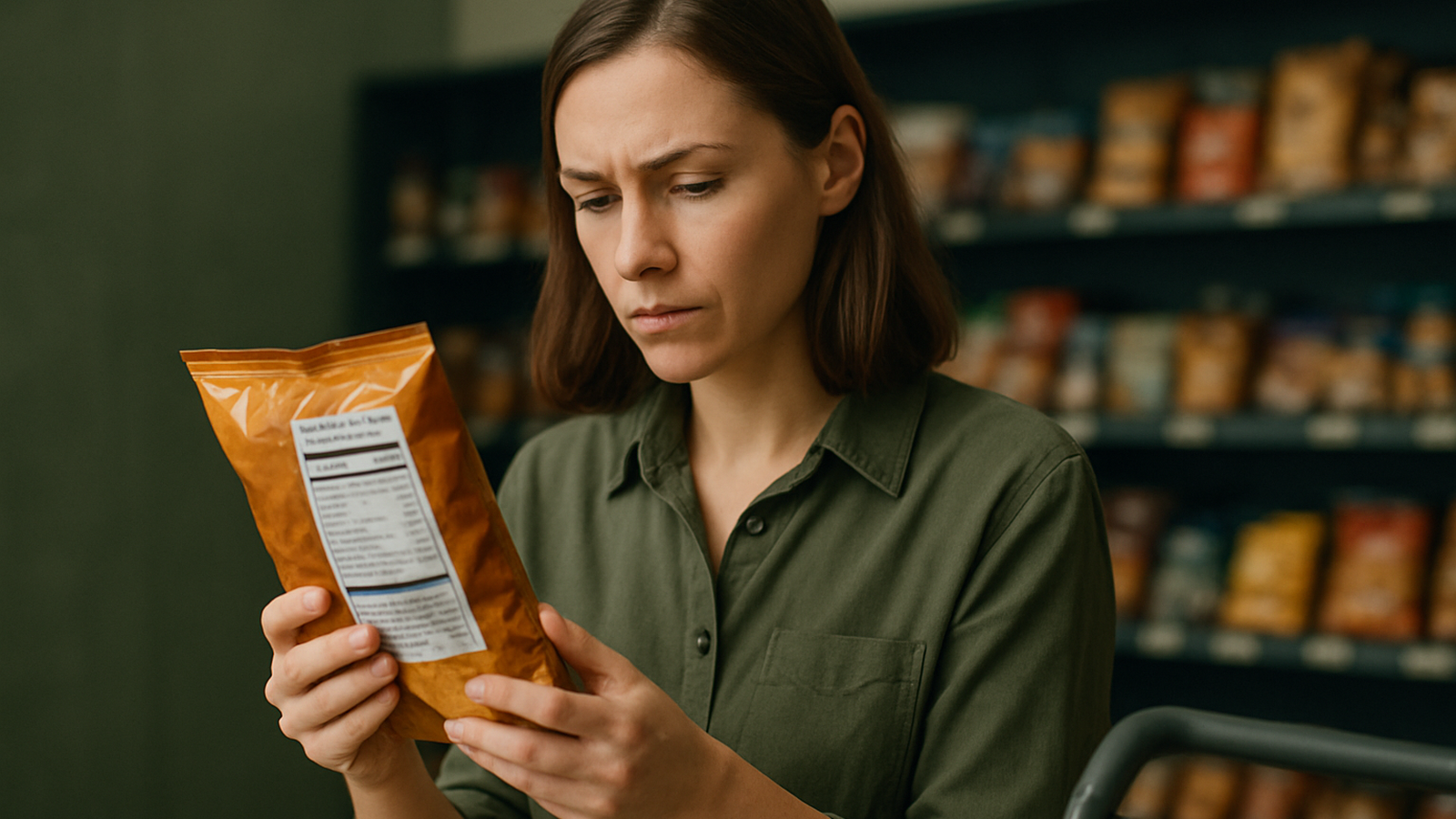
Look for ingredient lists that include items you wouldn't stock in your pantry: hydrolyzed proteins, modified starches, hydrogenated oils, emulsifiers, artificial colorings, flavor enhancers, and preservatives with chemical names. If the ingredient list reads like a lab inventory rather than a recipe, you're likely holding an ultraprocessed food.
Practical examples: packaged snack cakes, many breakfast cereals, instant noodles, mass-produced breads with long ingredient lists, reconstituted meat products, flavored yogurts with multiple additives, and shelf-stable meals with ingredient counts in the double digits.
You can spot these foods by reading labels, not by waiting for a psychiatric diagnosis. The information is already there.
The evidence for hyper-palatability—what happens in your brain and why it matters
Engineered combinations of fat, sugar, salt, and additives can activate reward pathways in the brain. Studies document that hyper-palatable foods—those designed to maximize sensory appeal—drive overconsumption in ways that whole foods typically do not.
When you eat these foods, your brain releases dopamine, the neurotransmitter associated with reward and motivation. Repeated exposure can lead to patterns where you seek out these foods despite knowing they contribute to outcomes you don't want, like weight gain or poor metabolic health. Some people report feeling unable to control portions or stop eating once they start.
This doesn't automatically equal addiction in the clinical sense. The brain's response to palatable food overlaps with, but is not identical to, its response to addictive substances. What remains unknown: why some individuals develop these patterns while others don't, and whether genetic, environmental, or psychological factors determine susceptibility.
What science does show is that certain foods are engineered to override satiety signals and encourage repeated consumption. That's a mechanism, not a diagnosis.
Why the addiction frame is contested—and what that means for your household
Some researchers support the addiction model, arguing that the behavioral and neurobiological evidence justifies the label. They point to loss of control, tolerance (needing more to achieve the same satisfaction), and withdrawal-like symptoms when people try to cut back.
Others reject the framework. Food is necessary for survival, they argue, making it fundamentally different from tobacco or alcohol. Eating behavior is shaped by culture, economics, and food environment in ways that substance use is not. Labeling food consumption as addiction risks medicalizing normal responses to an abundant, engineered food supply.
This debate shapes research funding, policy discussions, and treatment approaches. But it does not prevent you from acting.
You don't need to wait for scientists to agree on terminology before you reduce ultraprocessed foods in your household. The tools for identifying and replacing them exist now, on ingredient labels and in your kitchen. The academic debate is real, but it's not a prerequisite for practical change.
If you recognize these patterns in your own eating
If you feel loss of control around certain foods—eating past fullness, organizing your day around obtaining them, or continuing despite negative consequences—that experience is valid regardless of whether it qualifies as clinical addiction.
Practical reduction strategies focus on environmental design, not willpower. Remove trigger foods from your home or store them out of sight. Replace ultraprocessed snacks with whole-food alternatives you actually enjoy, not foods you think you "should" eat. Plan meals and snacks in advance to reduce decision fatigue. Eat regular, satisfying meals to prevent the extreme hunger that makes hyper-palatable foods harder to resist.
Substitution works better than deprivation. If you rely on packaged granola bars, try nuts and fruit. If you crave chips, experiment with roasted chickpeas or air-popped popcorn with real butter and salt. The goal is not perfection but a gradual shift toward foods with shorter ingredient lists.
Consult a healthcare provider if you experience disordered eating patterns: bingeing, purging, extreme restriction, or eating that significantly impairs your daily functioning. That's different from feeling drawn to engineered foods. This article cannot diagnose you or prescribe treatment. It can point you toward ingredient lists and practical swaps.
What this coverage does not establish—and what you can do without it
The term "ultraprocessed food addiction" is not clinically recognized. Individual headlines do not represent regulatory policy shifts. Not all ultraprocessed foods are uniformly harmful or addictive—context, quantity, and overall diet matter.
But you can act now. Ingredient lists tell you what's in the package. Nutrition panels show added sugars, sodium, and saturated fat. Your own experience tells you which foods you eat compulsively and which you can take or leave.
You don't need a psychiatric label to notice that certain foods are harder to stop eating. You don't need regulatory change to choose differently. You don't need scientific consensus to read an ingredient list and decide whether it looks like food or a chemistry experiment.
The practical verdict: label-reading works without waiting for consensus. Turn over the package. Count the ingredients. Ask whether you recognize them. That's a tool you already have.
Spotting ultraprocessed foods: ingredient list clues
Comparison basis: Typical single serving as consumed
| Common food | Typical ingredient count | Label clue | Whole-food swap |
|---|---|---|---|
| Mass-produced sliced bread | 15–20+ | Modified starches, dough conditioners, preservatives | Bakery bread with <5 ingredients |
| Packaged snack cakes | 20–30+ | Hydrogenated oils, artificial colors, emulsifiers | Homemade muffins or banana bread |
| Instant noodles | 15–25 | Flavor enhancers (MSG), hydrolyzed proteins, modified starches | Whole-grain pasta with real broth |
| Flavored yogurt (fruit-on-bottom) | 10–15 | Modified corn starch, artificial flavors, multiple sweeteners | Plain yogurt + fresh fruit |
| Breakfast cereal (sweetened) | 10–20 | Maltodextrin, artificial colors, BHT preservative | Oats with cinnamon and berries |
| Reconstituted meat products | 15–25+ | Mechanically separated meat, phosphates, nitrites | Whole cuts of meat or poultry |
| Shelf-stable ready meals | 20–40+ | Textured vegetable protein, flavor enhancers, multiple preservatives | Batch-cooked meals, frozen in portions |
Ingredient counts are approximate and vary by brand. Look for chemical names you wouldn't use in home cooking.






Comments
No login needed. Keep it kind — abusive language is filtered.