A day's worth of sugar—before you notice
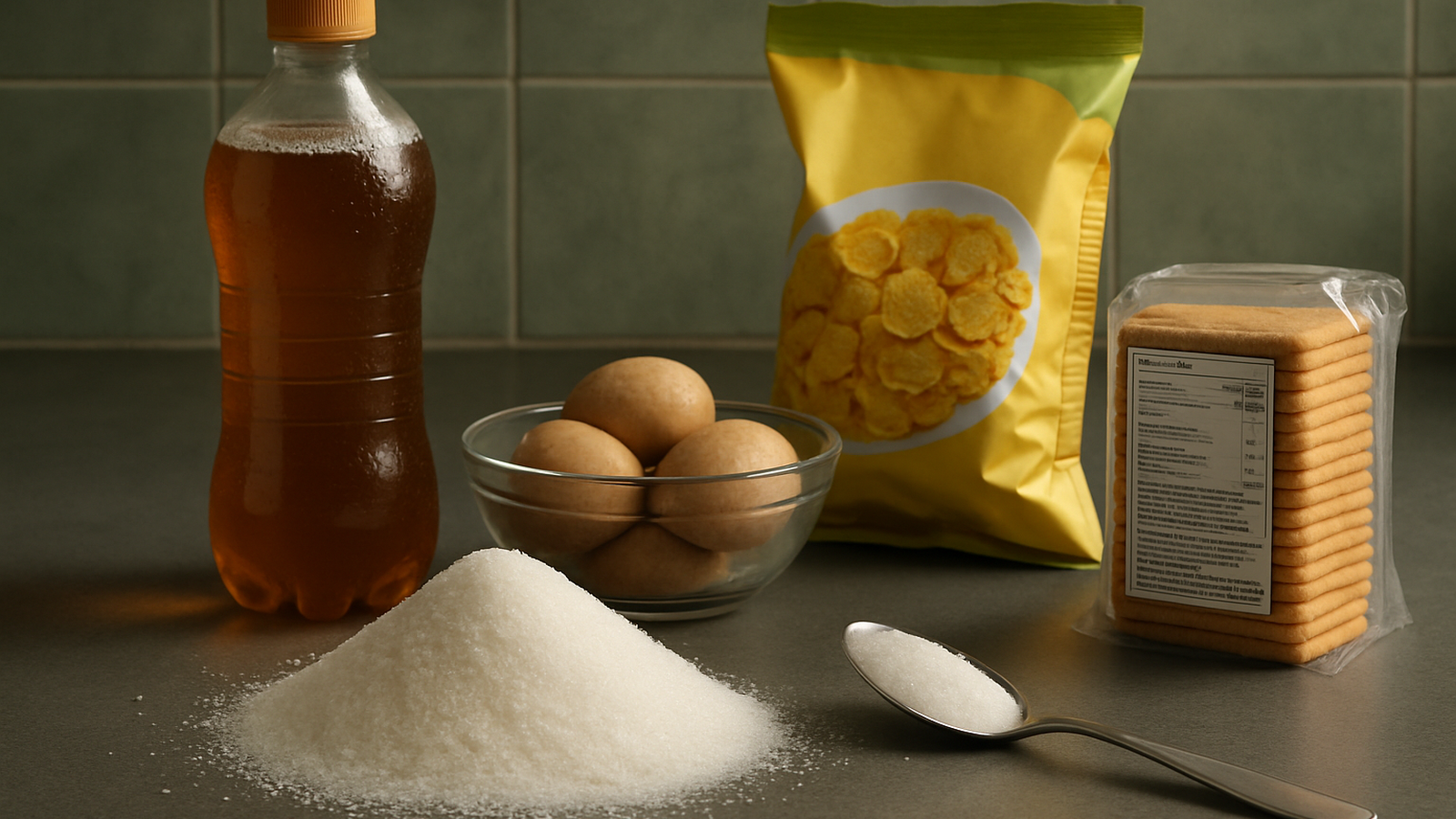
Two Marie biscuits with morning chai. A tablespoon of ketchup on your lunch roti. A cup of flavored strawberry yogurt at four o'clock. A handful of packaged namkeen before dinner. None of these feel like dessert, yet together they can deliver twelve teaspoons of added sugar—before you count the spoon you stirred into your chai or the mithai after dinner.
The World Health Organization recommends that free sugars—added sugars plus honey, syrups, and fruit juices—make up less than 10 percent of your total daily energy intake, with further health benefits observed when that figure drops below 5 percent. For someone eating 2,000 calories a day, 10 percent means fifty grams, or roughly twelve teaspoons. Five percent halves that to six teaspoons. Excessive consumption of added sugars is linked to weight gain and increased cardiometabolic risk patterns, yet much of what accumulates across an Indian day arrives without fanfare: in the biscuit tin, the condiment bottle, the snack cupboard.
The gap between invisible accumulation and conscious choice is not a mystery. It lives on the back of every pack, in three sections most of us scan past. Learning to read those sections is a practical skill for identifying added sugars in packaged food environments—and it works on any product, any aisle, without memorizing lists or downloading apps.
The three label sections that tell the sugar story
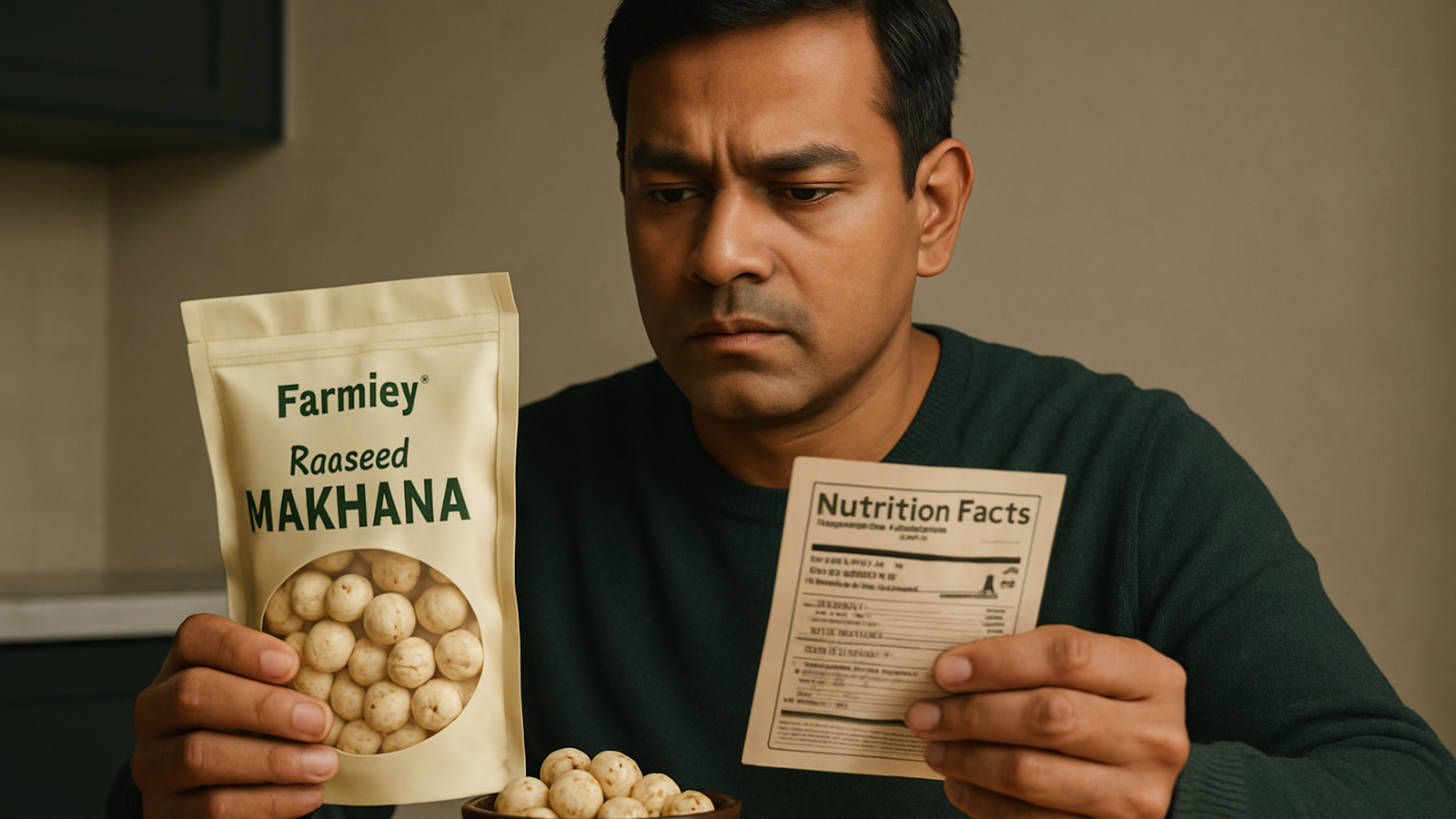
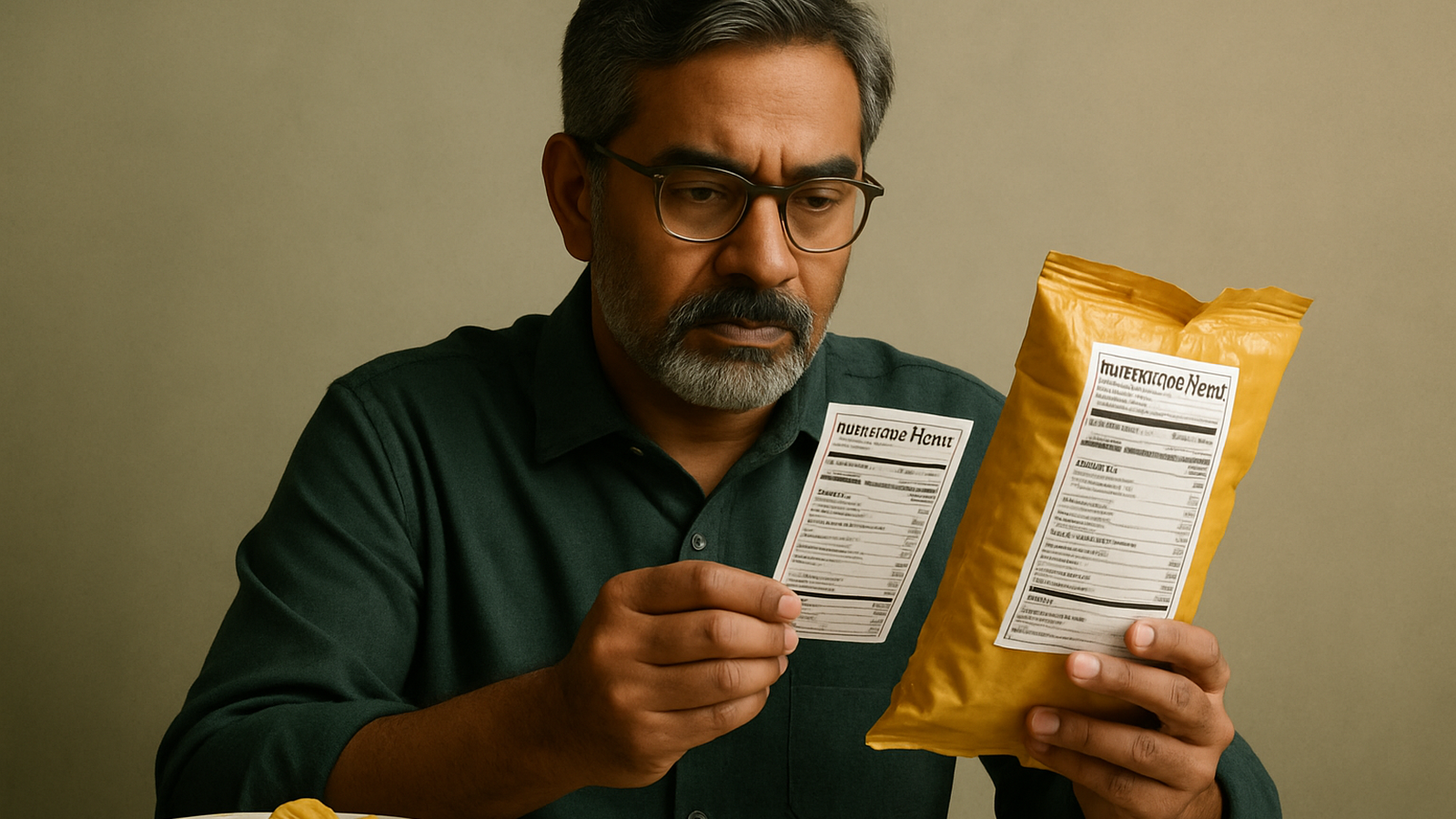
In India, the Food Safety and Standards Authority of India establishes the regulatory framework for food labeling and standards that manufacturers must follow. Every packaged food carries an ingredient list and a nutrition facts panel. Together with the serving size, these three elements tell you how much sugar you're buying and eating.
The ingredient list ranks components by weight, in descending order. If sugar appears second or third, it is a major ingredient, not a trace. Sugar travels under many names—sucrose, glucose, fructose, corn syrup, invert syrup, dextrose, maltose, fruit juice concentrate—so scan for all of them. The higher any form of sugar ranks, the more the product relies on it.
The nutrition facts panel reports total sugars per serving and, often, per 100 grams. Total sugars include both naturally occurring sugars—lactose in milk, fructose in fruit—and added sugars. Most Indian labels do not yet separate the two, so the ingredient list becomes your tell: if the product contains no dairy and no whole fruit, nearly all the sugar is added. The per-100-gram figure is the fairest basis for comparing across brands, because serving sizes vary.
The serving size is manufacturer-defined and may not match what you actually eat. A biscuit pack might list one serving as two biscuits, but if you eat four, double the sugar grams. Always check whether the portion on the label reflects the portion in your hand.
Walking through breakfast: chai, biscuits, and cereals
Start with the biscuit tin. Pick up any pack of glucose biscuits or cream biscuits and flip to the ingredient list. If sugar ranks second or third, check the nutrition panel: many popular biscuits carry 20 to 25 grams of total sugars per 100 grams—five to six teaspoons per hundred grams. If the serving size is listed as 30 grams (roughly three to four biscuits), you are looking at six to seven grams of sugar, or about one and a half teaspoons, from that serving alone.
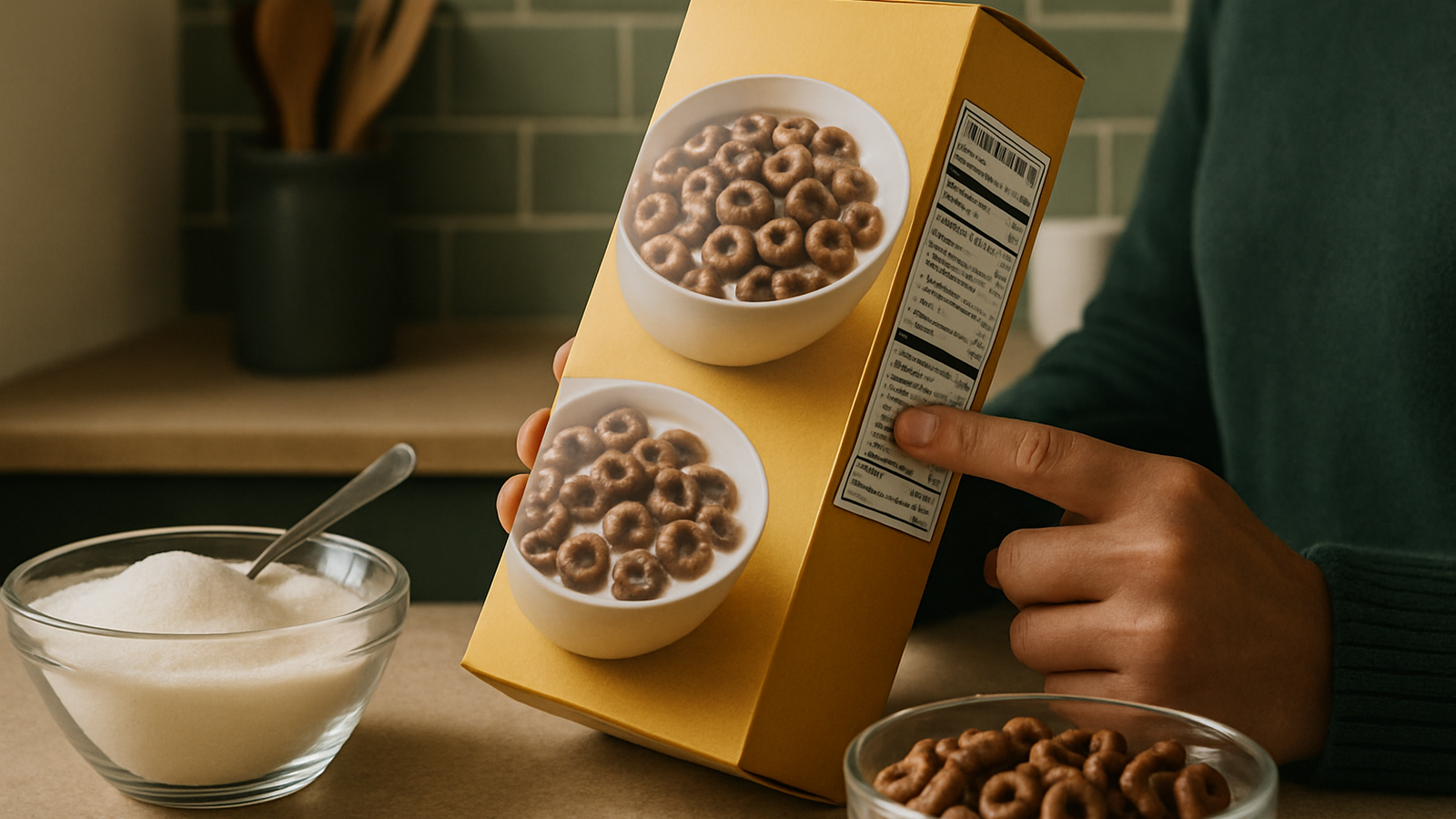
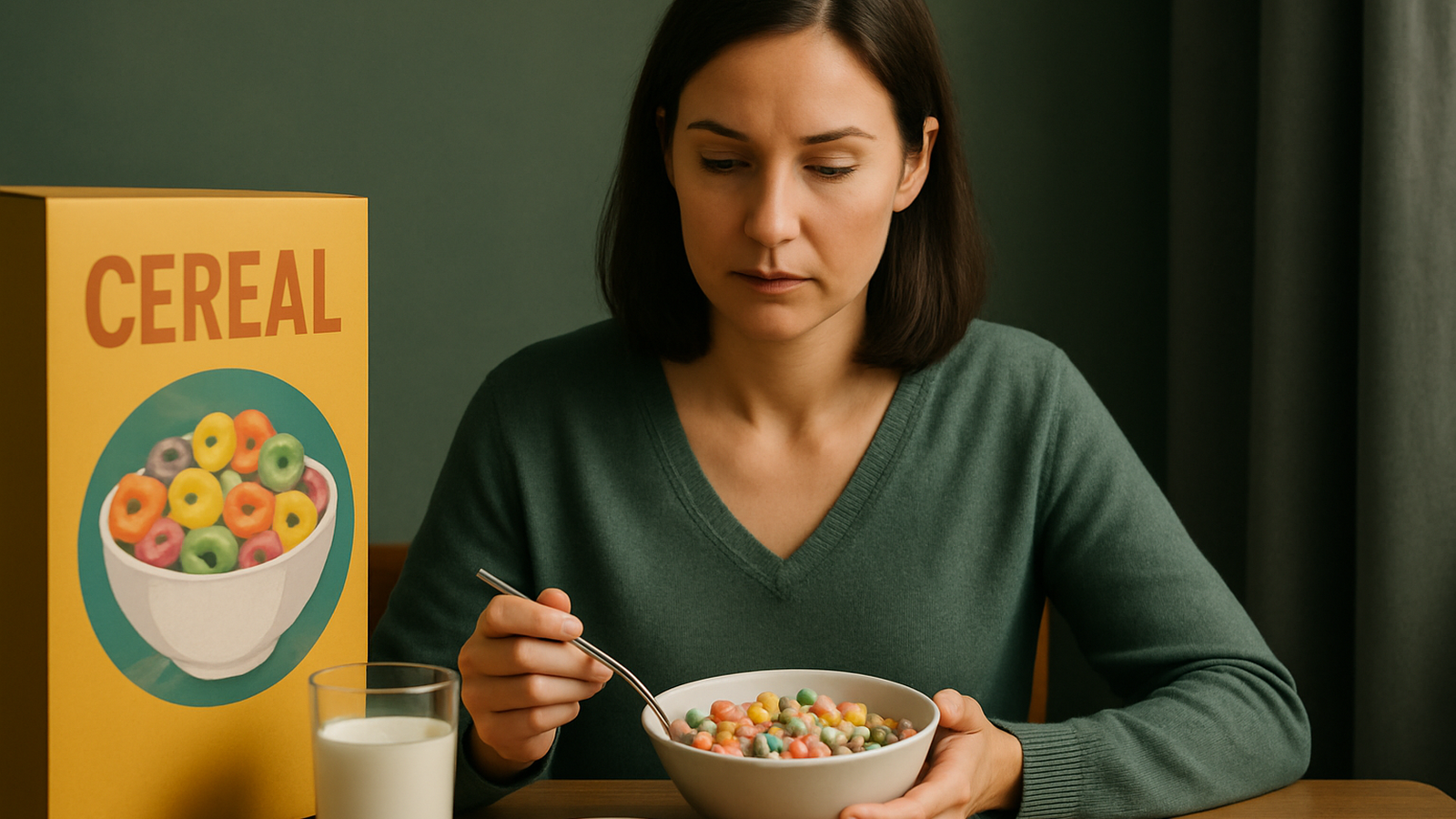
Breakfast cereals often wear front-of-pack health claims—whole grain, added vitamins, high fiber—but the back panel may tell a different story. Check the per-100-gram sugar content. Some flakes and puffs carry 25 to 35 grams per 100 grams, more than many biscuits. Compare across brands using that per-100-gram line; it cuts through portion tricks.
Chai itself is transparent when you add sugar at home; you see the spoon. Packaged chai mixes, instant tea powders, and sweetened condensed milk are not. If sugar or corn syrup ranks near the top of the ingredient list, the product is delivering added sugar with every pour.
To make sense of the grams, remember: four grams of sugar equals approximately one teaspoon. A quick mental divide gives you portion intuition.
Lunch and snacks: sauces, packaged namkeen, and flavored yogurt
Ketchup feels like a condiment, not a sweet, yet sugar often ranks second or third in the ingredient list, right after tomatoes. A tablespoon—about 15 grams—can carry four grams of sugar, or one teaspoon. Barbecue sauces, sweet chili sauces, and salad dressings follow the same pattern. Check the per-100-gram sugar content and compare: some brands carry 25 grams per 100 grams, others closer to 15. That gap matters over a month of meals.
Packaged namkeen and savory snacks do not always taste sweet, but some carry sugar for browning or flavor balance. The ingredient list will show whether sugar is present and where it ranks. If it appears in the first five ingredients, it is not incidental.
Flavored yogurt presents as a healthy snack, and plain yogurt does contain naturally occurring lactose. But if the ingredient list names sugar, fruit syrup, or fruit juice concentrate, the product carries added sugar on top of that lactose. A single-serve cup of flavored yogurt can deliver ten to fifteen grams of total sugars, much of it added. Compare per-100-gram figures across brands; plain yogurt with fresh fruit at home gives you control.
Translating grams into daily context—and your household's threshold
Take a typical day and tally the packaged intake using the labels you have just read. Two biscuits at breakfast: seven grams. A tablespoon of ketchup at lunch: four grams. A flavored yogurt mid-afternoon: twelve grams. A handful of packaged namkeen: three grams. A glass of packaged mango juice: twenty grams. Before dinner, you are at forty-six grams—eleven and a half teaspoons—from packaged items alone. Add the sugar you stirred into chai, and you are likely past the WHO's 10 percent threshold.
For someone eating 2,000 calories a day, 10 percent of total energy from free sugars equals 200 calories, or fifty grams, or roughly twelve teaspoons. Five percent halves that to twenty-five grams, or six teaspoons. Your own threshold depends on your total calorie intake, but the method is the same: convert label grams to teaspoons (divide by four), add them across the day, and compare to the guideline.
Naturally occurring sugars in plain milk and whole fruit are not the target of the WHO recommendation. The evidence links patterns of excessive added sugar intake to cardiometabolic risk, not single meals or naturally sweet whole foods. What you are tracking is the cumulative load from processed and packaged items over days and weeks.
What this label habit will not do—and what you decide
Reading labels reveals where added sugar sits in your day, but it does not prescribe elimination, diagnose disease, or replace medical advice. It will not reverse diabetes, guarantee weight loss, or tell you that a single day over the threshold causes harm. The evidence links patterns of excess intake to increased risk, not isolated meals.
Traditional chai, home-cooked dal, roti, sabzi, and whole fruit are not the problem. No single product is dangerous in isolation; the question is cumulative daily intake from packaged and processed sources. You decide your own balance between convenience, taste, and the WHO guidance. Some households will choose to stay well below 5 percent; others will accept 10 percent and focus their attention on the highest contributors. The label habit simply closes the gap between invisible accumulation and informed choice.
If you're shopping this week—three checks before the cart
Before any pack goes into your cart, run three checks. They take fifteen seconds and work on any product, any aisle.
Check the ingredient list. Where does sugar—or any of its aliases—rank? If it appears in the first three ingredients, the product relies on added sugar. If it appears further down, it is present but not dominant.
Check the nutrition panel. How many grams of total sugars per 100 grams? Compare across brands on that per-100-gram line. If the product contains no dairy and no whole fruit, nearly all of that total is added sugar.
Check the serving size. Does it match what you will actually eat? If the label says one serving is 30 grams but you eat 60, double the sugar grams.
Optional: convert grams to teaspoons by dividing by four. It gives you an intuitive sense of portion and makes the daily tally easier to track.
You do not need to memorize product lists, download apps, or avoid entire aisles. You need three label lines and the willingness to compare. The sugar is not hidden. It is printed, regulated, and waiting for you to read it.
Added sugar in common Indian packaged foods—per 100 g
Comparison basis: Per 100 grams for comparison; practical servings shown separately
| Food / drink | Sugar per 100 g | Practical serving | Label clue |
|---|---|---|---|
| Glucose / cream biscuits | ~20–25 g (5–6 tsp) | 30 g = ~6–7 g sugar | Sugar ranks 2nd or 3rd in ingredients |
| Breakfast cereal (flakes / puffs) | ~25–35 g (6–9 tsp) | 40 g = ~10–14 g sugar | Check per-100-g line; claims hide sugar |
| Tomato ketchup | ~20–25 g (5–6 tsp) | 15 g (1 tbsp) = ~4 g sugar | Sugar often 2nd after tomatoes |
| Flavored yogurt (single-serve cup) | ~10–15 g (2.5–4 tsp) | 100 g cup = ~10–15 g sugar | Ingredient list shows added sugar or syrup |
| Packaged mango juice | ~10–12 g (2.5–3 tsp) | 200 ml = ~20–24 g sugar | Fruit juice concentrate counts as free sugar |
| Packaged namkeen (some brands) | ~3–8 g (0.75–2 tsp) | 30 g = ~1–2 g sugar | Sugar in first 5 ingredients means not trace |
| Instant chai / tea powder mixes | ~40–60 g (10–15 tsp) | 15 g (1 serving) = ~6–9 g sugar | Sugar or corn syrup ranks near top |
Values are approximate and vary by brand, recipe, and portion. Use per-100-g figures on labels to compare across products. Four grams of sugar ≈ one teaspoon.








Comments
No login needed. Keep it kind — abusive language is filtered.