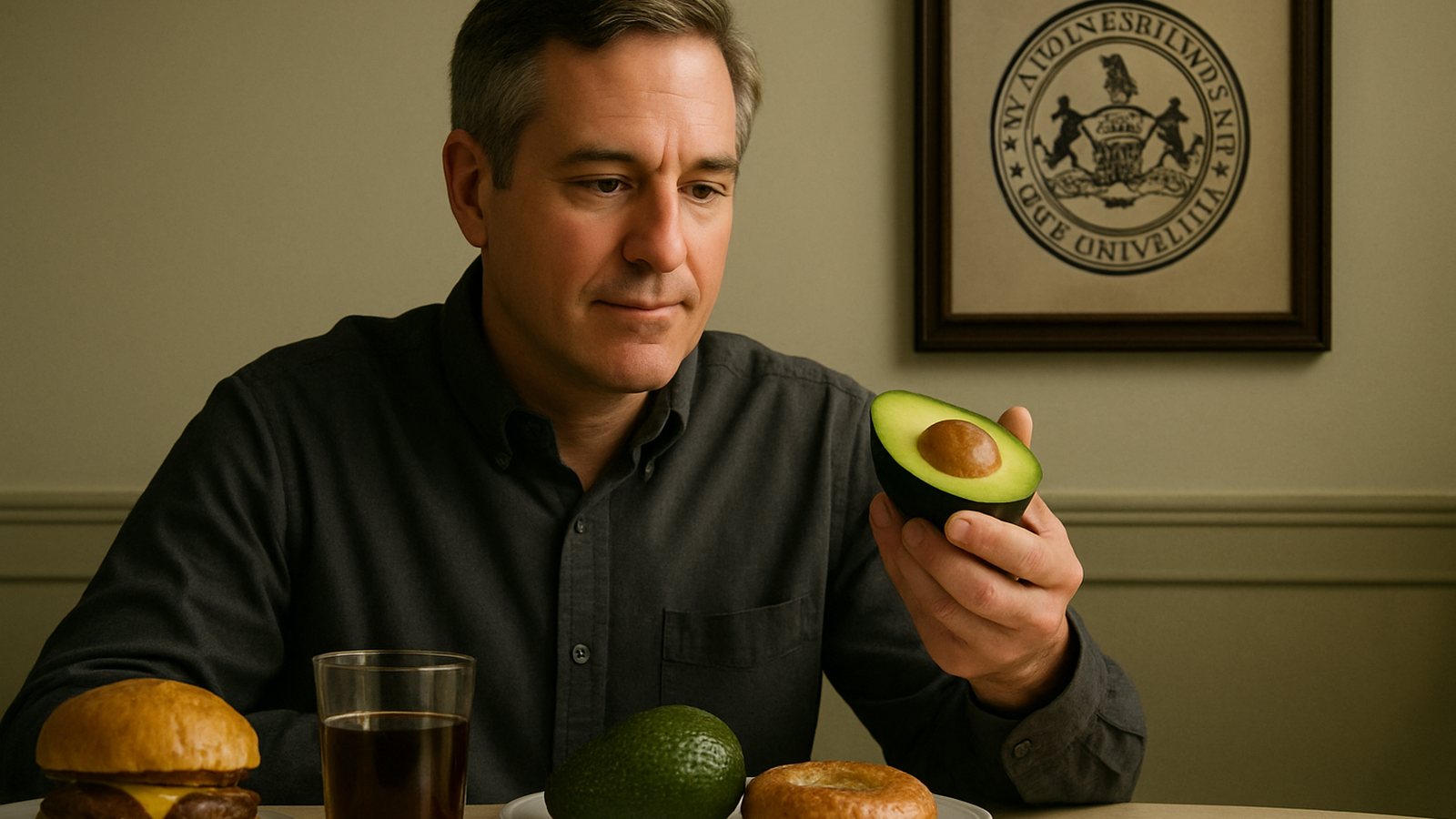
A recent study from The Pennsylvania State University found that adults with obesity who ate one avocado daily experienced a reduction in oxidized LDL particles—a specific cholesterol marker tracked by researchers. Before you add avocados to your cart, understand what was actually measured, who it applies to, and what it doesn't prove about heart disease.
What the Penn State study actually measured
The research focused exclusively on adults with obesity, not the general population. Scientists measured oxidized LDL particles, which are a biomarker researchers track because oxidation may make LDL cholesterol more likely to contribute to plaque buildup in arteries. The study did not measure heart attacks, strokes, or any actual cardiovascular disease outcomes.
Oxidized LDL particles represent a subset of the "bad" cholesterol you may know from standard blood tests. When LDL cholesterol undergoes oxidation through metabolic stress, it may become more harmful to artery walls. Researchers monitor these particles as an early signal of cardiovascular risk, but a change in this biomarker is not the same as preventing disease.
The cholesterol particle that changed—and the ones that didn't
The study documented a reduction specifically in oxidized LDL particles. This is distinct from your total cholesterol or standard LDL-C numbers that appear on routine blood work. The research measured a more granular marker that most people never see on lab reports.
The size of the change and whether other cardiovascular markers moved—such as total cholesterol, HDL, triglycerides, or blood pressure—determines the clinical significance. One biomarker shifting does not automatically translate to disease prevention. You can improve a lab value without reducing your actual risk of a heart attack, especially if other risk factors remain unaddressed.
Who this finding applies to—and who it doesn't
The study enrolled adults with obesity. That metabolic context matters because individuals with obesity often process and store fats differently than lean individuals. Their baseline inflammation, insulin sensitivity, and cholesterol particle profiles differ in ways that may influence how dietary fats affect biomarkers.
If you do not have obesity, this research does not tell you what will happen if you eat an avocado daily. The findings do not generalize to lean adults, children, or the broader public. More importantly, the study provides no data on long-term disease outcomes—whether heart attacks, strokes, or cardiovascular death—in any group, including those with obesity.
Extrapolating these results to your own situation without considering your metabolic health and weight status is unsupported by the evidence.
The calorie and cost trade-off no headline mentioned
One medium avocado contains roughly 240 calories. Eating one every day adds up to 1,680 calories per week—nearly an extra day's worth of energy for many adults. If you simply add an avocado without removing something else, you may gain weight, which can worsen the very cardiovascular risk factors you're trying to improve.
The study does not detail what foods participants reduced to accommodate the avocado. That displacement matters. If the avocado replaced saturated fat from butter or cream, the benefit may come partly from what was removed, not just what was added. If it replaced fiber-rich whole grains or other nutrient-dense foods, the trade-off may be neutral or even negative.
Cost is another practical barrier. A daily avocado habit can run $20 to $35 per week depending on your region and season. Over a year, that's more than $1,000 for one food, which may not be feasible or the best use of a grocery budget for heart health.
Three questions the study left unanswered
First, does the reduction in oxidized LDL particles actually prevent heart attacks or strokes? The research did not track disease events, so we do not know if the biomarker change translates to fewer hospitalizations or deaths.
Second, does this intervention work outside the population studied? No evidence exists for lean individuals, and we do not know if the effect persists long-term or requires permanent daily intake.
Third, is a daily avocado better than other dietary patterns proven to reduce cardiovascular disease? The study did not compare avocado consumption to Mediterranean, DASH, or other heart-healthy eating patterns. Those diets have decades of evidence showing they reduce actual heart attacks and mortality, not just biomarkers. We do not know if avocados offer unique benefits or simply deliver monounsaturated fats and fiber available from many other foods.
If you're considering a daily avocado
Adults with obesity who want to improve cardiovascular biomarkers might reasonably discuss this approach with a healthcare provider. But it must be done thoughtfully: identify what you will remove from your diet to make room for 240 calories, and monitor your weight to ensure the addition does not backfire.
This is not a substitute for broader dietary improvements or medical management. Avocados are not uniquely necessary. Olive oil, nuts, seeds, and fatty fish deliver similar monounsaturated fats and fiber. One food cannot offset poor overall diet quality, physical inactivity, or smoking.
If you decide to try a daily avocado, take one concrete action: before you start, write down what specific food you will eat less of to make calorie room. Track your weight weekly for the first month. If the scale climbs, the intervention is not working as intended, regardless of what may be happening to oxidized LDL particles you cannot see.
For readers without obesity, the evidence does not support adopting this habit. For anyone, remember that heart health depends on the overall pattern of what you eat, not the presence or absence of one food.
Monounsaturated fat sources: calories and practical swaps
Comparison basis: Standard serving sizes shown for each food
| Food / drink | Calories per serving | Monounsaturated fat | Practical swap context |
|---|---|---|---|
| Avocado, medium | ~240 | ~15 g | Replaces butter on toast or in salad |
| Olive oil, 1 tbsp | ~120 | ~10 g | Use for cooking or dressing |
| Almonds, 1 oz (~23 nuts) | ~160 | ~9 g | Snack or salad topping |
| Peanut butter, 2 tbsp | ~190 | ~8 g | Spread or smoothie addition |
| Cashews, 1 oz (~18 nuts) | ~160 | ~8 g | Snack or stir-fry ingredient |
| Salmon, 3 oz cooked | ~175 | ~2 g | Also provides omega-3 fats |
| Hazelnuts, 1 oz (~21 nuts) | ~180 | ~13 g | Snack or baking ingredient |
Values are approximate and vary by brand, preparation, and portion. Monounsaturated fats are available from many foods; no single source is required for heart health.






Comments
No login needed. Keep it kind — abusive language is filtered.