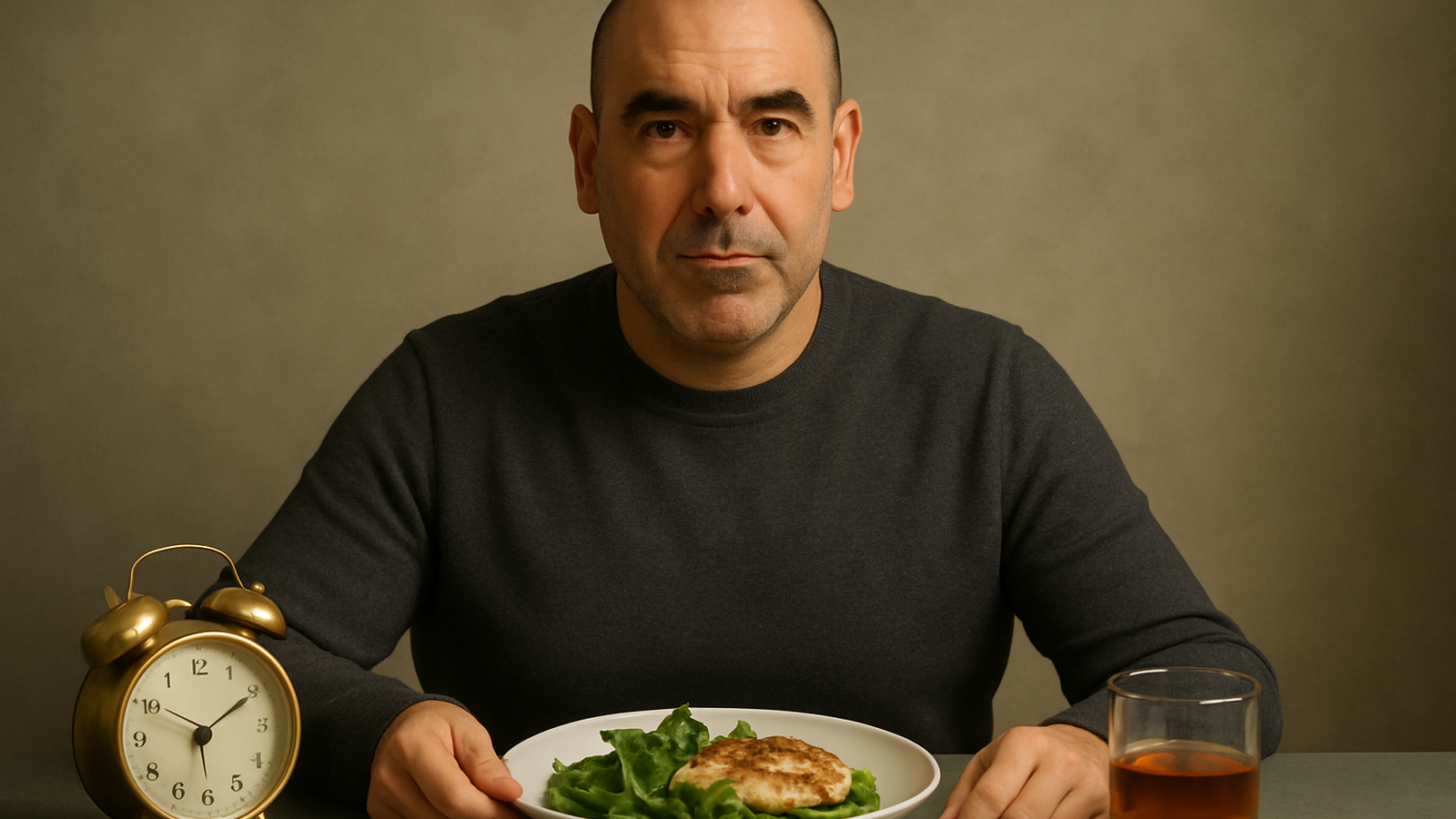
If you can't stick to calorie counting, intermittent fasting might simplify your day—but it won't change the number on the scale. The two claims circulating in recent coverage are often conflated: that intermittent fasting may be easier to maintain than traditional dieting, and that it produces better weight loss. The evidence supports the first for some people. It does not support the second.
What the adherence claim actually rests on
Intermittent fasting restricts when you eat, not what you eat. Instead of tracking calories meal by meal, you confine eating to a window—say, eight hours—and fast the rest of the day. Some studies suggest intermittent fasting may be easier to maintain than traditional calorie counting, and the reason is straightforward: fewer decisions. You don't log portions or calculate macros. You watch the clock.
For people who find calorie tracking tedious or anxiety-inducing, that simplicity can feel like relief. The adherence advantage is real for some. But adherence to a method and results from that method are separate metrics. Sticking to an eating window does not automatically produce greater weight loss than sticking to calorie restriction. The research makes this distinction clear.
The weight-loss outcomes researchers actually measured
When scientists compare intermittent fasting to other diets in controlled conditions, the outcomes converge. Scientific reviews have found that intermittent fasting may make little difference to weight loss compared to other diets. Weight loss depends on energy balance—calories in versus calories out—and intermittent fasting does not exempt you from that equation. It may help some people create a calorie deficit without counting, but the deficit itself, not the eating window, drives weight loss.
This is not a failure of intermittent fasting. It's a clarification. If you're drawn to time restriction because you hope it will deliver better results than calorie counting, the evidence does not support that expectation. If you're drawn to it because you'd rather manage a schedule than a food diary, that's a different question—and one worth exploring.
Why individual responses vary—and what that means for your household
Intermittent fasting research shows metabolic benefits, but individual responses vary. Some people report improved energy and appetite regulation within an eating window. Others feel irritable, distracted, or hungrier. Some find the structure clarifying; others find it rigid. The variation is not a flaw in the method—it reflects the reality that no single dietary pattern works uniformly across all bodies, schedules, and preferences.
This means intermittent fasting is not a universal solution. "Works for some" does not mean "works for most" or "will work for you." Household schedule and preference matter more than trend headlines. If your mornings require focus and you skip breakfast easily, an eating window might fit. If you need fuel early or your family eats dinner late, time restriction may add friction instead of simplifying your day.
The schedule question intermittent fasting actually asks
The decision to try intermittent fasting is not about finding a magic adherence fix. It's about whether an eating window fits your day. Time restriction adds structure when your eating patterns are already loose or reactive. It adds friction when your day requires flexibility—shift work, caregiving, variable meal times with others.
An eating window requires planning around social meals, work obligations, and your body's hunger signals. If you currently eat breakfast at seven, lunch at noon, and dinner at seven, an eight-hour window means skipping one meal or compressing your day. If you currently graze from morning to evening, an eating window imposes a boundary you haven't maintained before. Neither is inherently easier—it depends on what you're changing from.
Testing fit without declaring a permanent switch is the practical approach. Try a consistent eating window for two weeks. Notice whether it simplifies decisions or creates new ones. Notice whether hunger feels manageable or intrusive. Notice whether your household rhythm accommodates it or resists it. If the window adds pressure instead of clarity, you have your answer.
What this coverage does not establish
Celebrity weight-loss stories are not evidence of efficacy. Individual testimonials, regardless of their visibility, do not demonstrate that a method works broadly or that it will work for you. Scientific reviews assess populations, control for variables, and measure outcomes systematically. Anecdotes do not.
Intermittent fasting is not proven superior for long-term weight management. The research shows comparable outcomes to calorie restriction, not better ones. This is not a new breakthrough. Time-restricted eating has been studied for years, and the evidence base remains mixed on whether it offers advantages beyond what other dietary approaches provide.
Individual variation means intermittent fasting will not solve adherence problems for everyone. Some people find eating windows easier to follow. Others do not. The method does not override the fundamental challenge of sustained behavior change, and it does not work uniformly across different bodies and lives.
If you're considering an eating window
Start with a realistic trial. Choose an eight- or ten-hour eating window that aligns with your current schedule—don't force a dramatic shift. Eat the same foods you normally would; this is a test of timing, not content. Track how you feel: energy, hunger, mood, and whether the window feels like structure or restriction.
Monitor beyond the scale. Weight outcomes will likely mirror what you'd see with calorie restriction, so focus on whether the approach feels sustainable. Can you maintain it on weekends? Does it accommodate social meals? Does it reduce decision fatigue, or does watching the clock add stress?
Stop if the window adds pressure instead of simplifying your day. If you're constantly hungry, distracted, or planning your life around the clock, the method is not serving you. If you find yourself bingeing at the start or end of your window, the restriction is creating problems, not solving them.
Expect weight outcomes comparable to other approaches. If you're in a calorie deficit, you'll lose weight. If you're not, you won't—regardless of when you eat. Intermittent fasting is a tool for creating that deficit without tracking, but it's not a shortcut around energy balance.
The promise of easier adherence is real for some people. The promise of better results is not supported by the evidence. If an eating window fits your household rhythm and reduces the friction of meal decisions, it may be worth trying. If it doesn't, you're not failing—you're responding to your own reality, which is exactly what the research on individual variation would predict.
Common intermittent fasting windows and what they actually require
Comparison basis: Daily or weekly eating schedule
| Eating window | Fasting period | Typical meal pattern | Schedule fit |
|---|---|---|---|
| 16:8 (16-hour fast) | 16 hours | Skip breakfast or late dinner | Works if you naturally eat late or skip morning meals |
| 14:10 (14-hour fast) | 14 hours | Early dinner or late breakfast | Easier starting point; fits most family schedules |
| 12:12 (12-hour fast) | 12 hours | Stop eating by 8pm if breakfast at 8am | Minimal change for structured eaters; may not create deficit |
| 18:6 (18-hour fast) | 18 hours | One or two meals in 6 hours | Requires compressing meals; harder with social or family dining |
| 20:4 (20-hour fast) | 20 hours | Typically one large meal | Very restrictive; high risk of hunger and bingeing |
| 5:2 (weekly pattern) | 2 non-consecutive low-calorie days | ~500-600 calories on fast days | Requires planning around work and social commitments |
These windows describe timing only, not food choices. Actual hunger, energy, and adherence vary by individual schedule, body, and current eating patterns.
















Comments
No login needed. Keep it kind — abusive language is filtered.