Why celebrity protein coverage lands in your feed
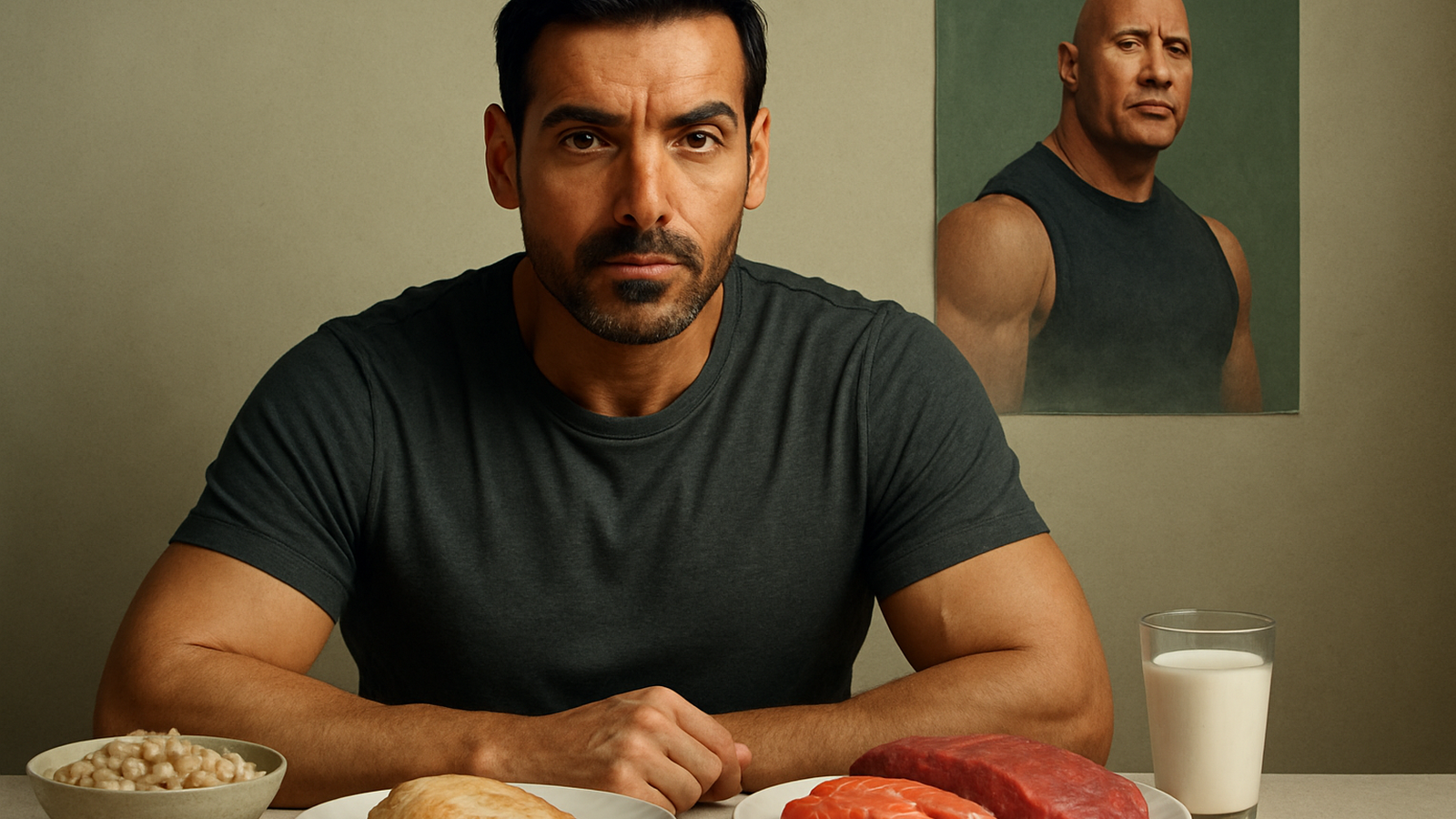
The Times of India published a comparison this week of John Abraham and Dwayne Johnson's high-protein dietary approaches. Both actors maintain high-protein intake to support their respective physical fitness goals—goals tied directly to their work in physically demanding film roles.
This is lifestyle coverage, not clinical research or public health guidance. Celebrity diets reflect paid performance goals, not household nutrition templates. When an actor's job requires maintaining a specific physique on camera, their eating strategy serves that professional requirement. It doesn't translate to evidence-based guidance for typical household needs.
What 'high-protein' means when the job is physical performance
High-protein diets are tailored to individual fitness goals and physical requirements. For actors preparing for action roles, protein intake supports intensive training regimens designed to produce visible results on screen within contracted timeframes. These are professional protocols built around paid performance outcomes.
The Times of India coverage does not detail the specific macronutrient ratios or caloric intake of either individual, making it impossible to assess the health safety of their specific protocols. Without that information, readers cannot evaluate whether these approaches would be appropriate, safe, or effective outside the context of professional training supervision and specific performance goals.
Celebrity regimens support outcomes that are fundamentally different from typical household needs. Most people are not training for film roles, working with professional nutrition staff, or pursuing the physical benchmarks required by entertainment contracts.
How much protein your household actually requires
Most adults can meet their protein requirements through a balanced, mixed diet. Adequate protein intake is essential for the maintenance of muscle mass and overall health across different life stages, but meeting those requirements doesn't require celebrity-level strategies or specialized protocols.
Protein needs vary by age, activity level, and life stage—not by celebrity benchmark. A sedentary adult has different requirements than someone training regularly. Older adults may benefit from higher protein intake to support muscle maintenance. Pregnant or breastfeeding individuals have increased needs. But none of these variations are informed by what actors eat for film preparation.
For most households, protein adequacy comes from including protein sources across meals: eggs at breakfast, legumes in a lunch salad, chicken or fish at dinner, yogurt as a snack. These normal eating patterns typically provide sufficient protein without requiring specialized planning, supplementation, or dramatic dietary restructuring.
What this coverage does not establish
The Times of India article does not detail specific protocols, so efficacy and safety cannot be assessed. Without information about total caloric intake, meal timing, supplementation, training volume, or medical supervision, readers cannot determine whether these approaches would be safe or effective for different individuals under different circumstances.
A single news article does not establish a trend in celebrity nutrition or clinical guidance for the general population. Lifestyle journalism about two individuals' eating habits does not constitute evidence about what works for broader populations or what health authorities recommend.
No evidence supports emulating celebrity protein strategies for household health. The fact that two actors maintain high-protein intake to support professional performance goals tells us nothing about whether similar approaches would benefit, harm, or simply complicate meal planning for people with different needs, resources, and goals.
If you're considering changing your protein intake
You can assess protein adequacy from normal meals without celebrity benchmarks. Look at your current eating pattern: Are you including protein sources at most meals? Eggs, dairy, meat, fish, legumes, nuts, whole grains all contribute. If you're eating a varied diet that includes these foods regularly, you're likely meeting your requirements.
Higher protein intake may be appropriate in specific circumstances. If you're significantly increasing physical activity, recovering from illness or surgery, or entering life stages where muscle maintenance becomes more challenging, you might benefit from more deliberate protein planning. Older adults, in particular, may need to pay more attention to protein distribution across meals.
But there's a critical distinction between meeting requirements and pursuing performance goals. Meeting your protein requirements supports normal health and function. Pursuing performance goals—whether for athletic competition, bodybuilding, or film roles—involves strategies designed to optimize specific outcomes beyond basic health maintenance.
If you're uncertain about your protein intake, the question isn't whether you should eat like John Abraham or Dwayne Johnson. The question is whether your current eating pattern provides adequate protein for your age, activity level, and health status. That assessment doesn't require celebrity examples. It requires looking honestly at what you're actually eating and, if needed, consulting with a healthcare provider who understands your specific circumstances.
Celebrity training diets make compelling lifestyle content because they're extreme, expensive, and attached to recognizable faces. But they're built for professional performance under professional supervision. Your household protein needs are almost certainly different—and almost certainly manageable through the balanced meals you're already capable of preparing.
Protein in common foods—no celebrity protocol required
Comparison basis: Per 100g or per standard portion as noted
| Food / drink | Protein per serving | Practical use |
|---|---|---|
| Chicken breast, cooked | ~31g per 100g | Dinner staple, meal prep base |
| Lentils, cooked | ~9g per 100g | Budget-friendly, works in soups and salads |
| Greek yogurt | ~10g per 100g | Breakfast or snack, pairs with fruit |
| Eggs, whole | ~6g per egg | Quick breakfast, adds protein to any meal |
| Canned tuna | ~25g per 100g | Shelf-stable, lunch or sandwich filling |
| Almonds | ~6g per 30g handful | Portable snack, adds crunch to meals |
| Tofu, firm | ~8g per 100g | Versatile for stir-fries and curries |
| Milk, whole | ~3.4g per 100ml | Beverage or cooking ingredient |
Values are approximate and vary by brand, preparation method, and portion size. Most adults meet protein needs by including varied sources across regular meals.













Comments
No login needed. Keep it kind — abusive language is filtered.