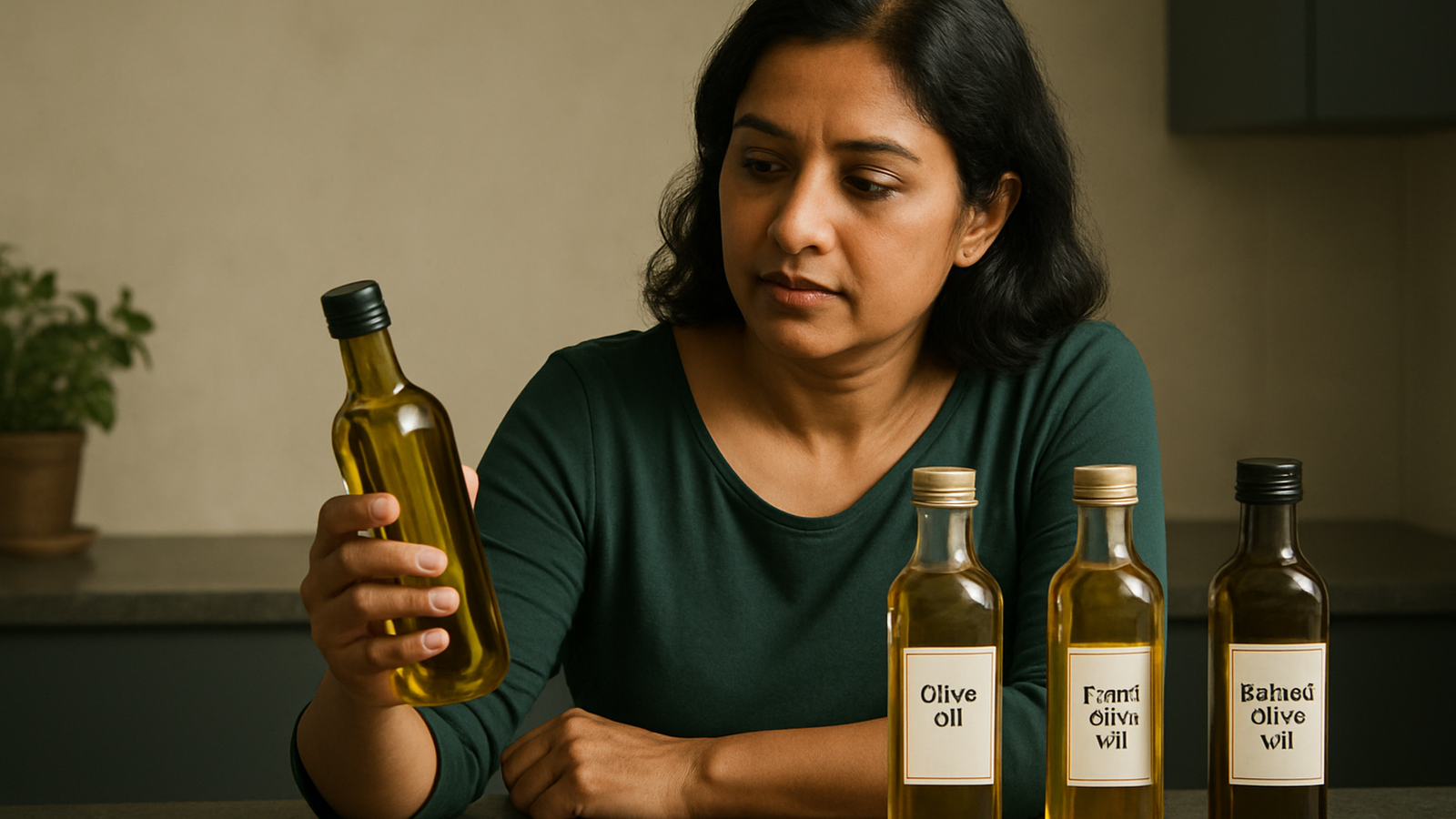
The four grades FSSAI requires on every bottle
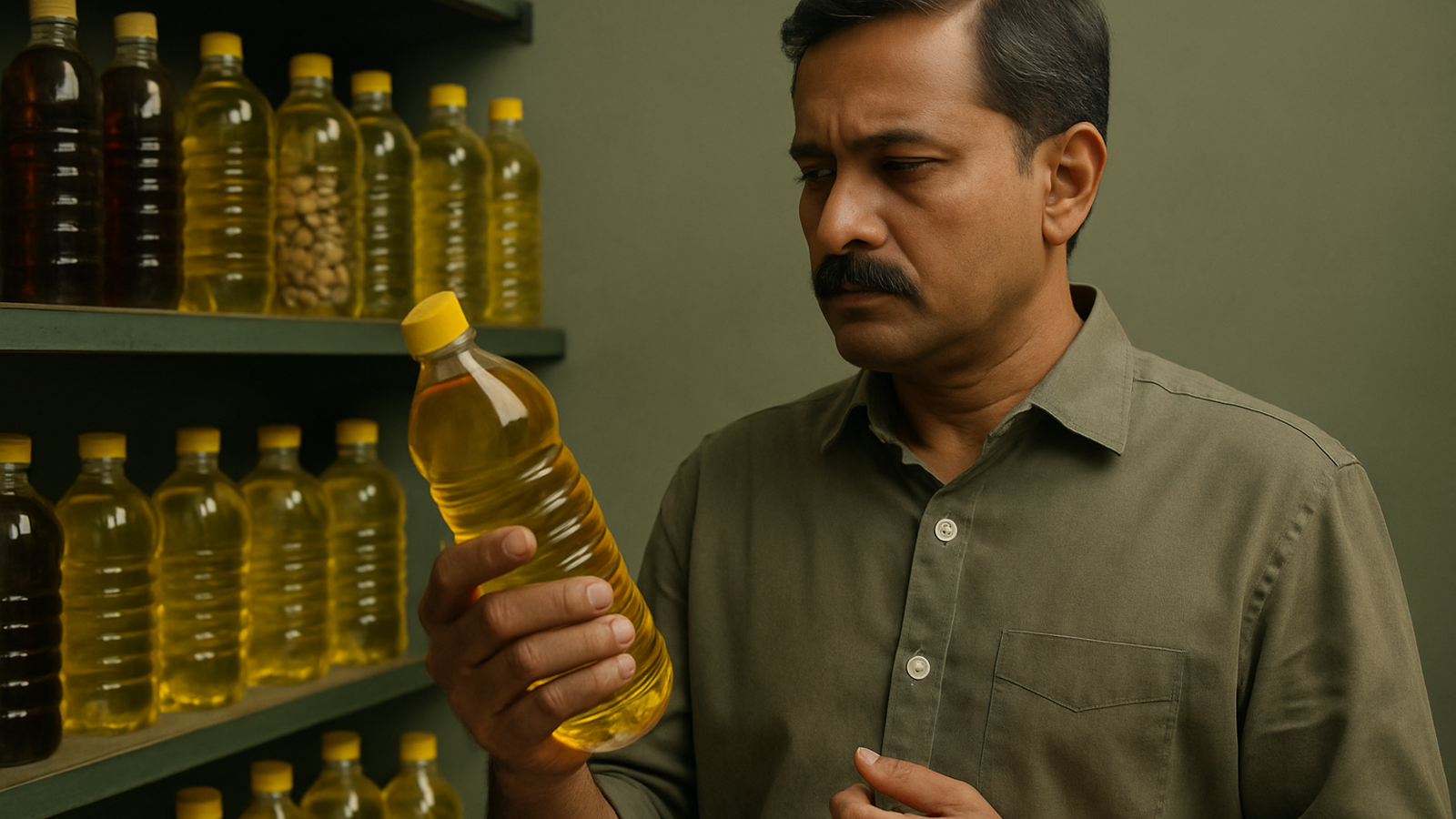
In India, the Food Safety and Standards Authority of India sets the labelling and quality standards that manufacturers must follow. Every bottle of olive oil sold legally in the country must carry one of four grade designations: extra virgin, virgin, refined, or pomace. These are not marketing terms. They are regulated classifications that reflect measurable differences in how the oil was extracted and how much acidity it contains.
If you pick up a bottle without one of these four labels, walk past it. The grade marking is your starting point for choosing an oil that matches what you plan to cook.
What each grade name tells you about processing and flavor
Extra virgin olive oil comes from mechanical pressing—no heat, no chemicals—and must contain no more than 0.8 percent free acidity. Because nothing strips away the compounds that give olives their taste, extra virgin retains the fruit's flavor, color, and aroma.
Virgin olive oil also relies on mechanical extraction, but it tolerates slightly higher acidity and may carry milder flavor. The sensory profile is less pronounced than extra virgin, though the oil remains unrefined.
Refined olive oil starts with virgin oil that has defects—off flavors, high acidity, or both. Manufacturers use chemical processes to neutralize those flaws, leaving a pale, nearly flavorless liquid. Refining removes most of the compounds that define olive character.
Pomace olive oil is extracted from the pulp, pits, and skins left after the first pressing. Solvents pull residual oil from this waste material, then refining removes impurities. The result is the lightest grade in both color and flavor.
Smoke point decides which grade survives your stove
Smoke point is the temperature at which an oil breaks down, releases visible smoke, and begins to form compounds that taste burnt. Once an oil smokes, its flavor degrades and its structure changes.
Extra virgin olive oil typically smokes between 160 and 190 degrees Celsius. That range suits low-heat cooking or drizzling over finished dishes, but it does not tolerate prolonged high heat.
Virgin olive oil sits between extra virgin and refined, with a smoke point slightly higher than extra virgin but still moderate.
Refined olive oil and pomace olive oil both tolerate temperatures from roughly 200 to 240 degrees Celsius. The refining process strips away the free fatty acids and flavor compounds that break down early, so these grades hold up under sustained heat.
Matching grade to common Indian cooking methods
Tadka—tempering whole spices in hot oil—usually reaches 150 to 180 degrees Celsius. Extra virgin or virgin olive oil can handle that range without smoking. If you want olive flavor in your dal or kadhi, these grades deliver it.
Sautéing vegetables over medium heat climbs to around 180 to 200 degrees. Virgin or refined olive oil works here. Extra virgin may smoke if the pan runs hot or the cooking time stretches.
Shallow frying—making dosa, pan-frying fish, or crisping paneer—pushes temperatures to 200 to 220 degrees. Refined or pomace olive oil tolerates this heat. Extra virgin will smoke and lose the antioxidants and flavor compounds that justify its higher price.
Deep frying demands 220 to 240 degrees Celsius. Only pomace or refined olive oil should go into a kadhai for bhajiya or pakora. Extra virgin and virgin grades will smoke, degrade, and waste money.
When you heat extra virgin olive oil past its smoke point, you lose the phenolic compounds and tocopherols that make it distinct. If high heat is unavoidable, choose a grade built to withstand it.
What this classification does not tell you
The grade on the label does not indicate whether the oil inside the bottle is pure, adulterated, or worth its price. Without lab testing, you cannot know if a brand has mixed in cheaper oils or misrepresented the grade. FSSAI sets the labelling rules, but enforcement depends on testing and compliance, which vary.
Switching to olive oil does not, by itself, guarantee better health. Public health guidance generally favors replacing saturated fats with unsaturated plant oils, such as olive oil, to support heart health. The World Health Organization encourages the consumption of unsaturated fats while limiting the intake of saturated and trans fats. But olive oil is one option among many plant oils that deliver unsaturated fats. No grade of olive oil prevents or treats any disease.
Grade alone does not determine health outcome. How much oil you use, what else you eat, and how you cook all matter more than the label on the bottle.
If you're buying olive oil this week
First, check the label for the grade. FSSAI requires it, so if it is missing, the product may not meet regulatory standards.
Second, match the grade's smoke point to your most frequent cooking method. If you temper spices and drizzle over salads, extra virgin or virgin makes sense. If you shallow-fry or deep-fry regularly, refined or pomace will perform better and cost less per liter.
Third, compare price per liter within the same grade. A costly extra virgin is wasted money if you plan to heat it past 190 degrees. A budget pomace works fine for high-heat tasks where flavor is not the goal.
Smoke points and cooking methods at a glance
| Grade | Smoke Point (°C) | Suitable Cooking Methods |
|---|---|---|
| Extra virgin | 160–190 | Tadka, drizzling, low-heat sautéing |
| Virgin | 180–200 | Tadka, moderate sautéing |
| Refined | 200–240 | Sautéing, shallow frying, deep frying |
| Pomace | 200–240 | Shallow frying, deep frying |
The grade tells you how the oil was made and how much heat it can take. Everything else—brand reputation, purity, price—requires additional scrutiny. Start with the label, match the smoke point to your stove, and buy accordingly.
Olive oil grades vs. common Indian cooking temperatures
Comparison basis: Temperature ranges reflect typical stovetop conditions
| Cooking method | Typical temp (°C) | Safe grade(s) | Why it matters |
|---|---|---|---|
| Drizzling on salad or raita | Room temp | Extra virgin, Virgin | Preserves flavor & antioxidants |
| Tadka (tempering spices) | ~150–180 | Extra virgin, Virgin | Stays below smoke point |
| Sautéing vegetables | ~180–200 | Virgin, Refined | Extra virgin may smoke if pan runs hot |
| Shallow frying (dosa, paneer) | ~200–220 | Refined, Pomace | Extra virgin will smoke & degrade |
| Deep frying (pakora, bhajiya) | ~220–240 | Pomace, Refined | Only these grades tolerate sustained high heat |
Temperatures are approximate and vary by flame intensity, pan material, and cooking duration. Heating extra virgin past its smoke point wastes the compounds that justify its higher price.





Comments
No login needed. Keep it kind — abusive language is filtered.