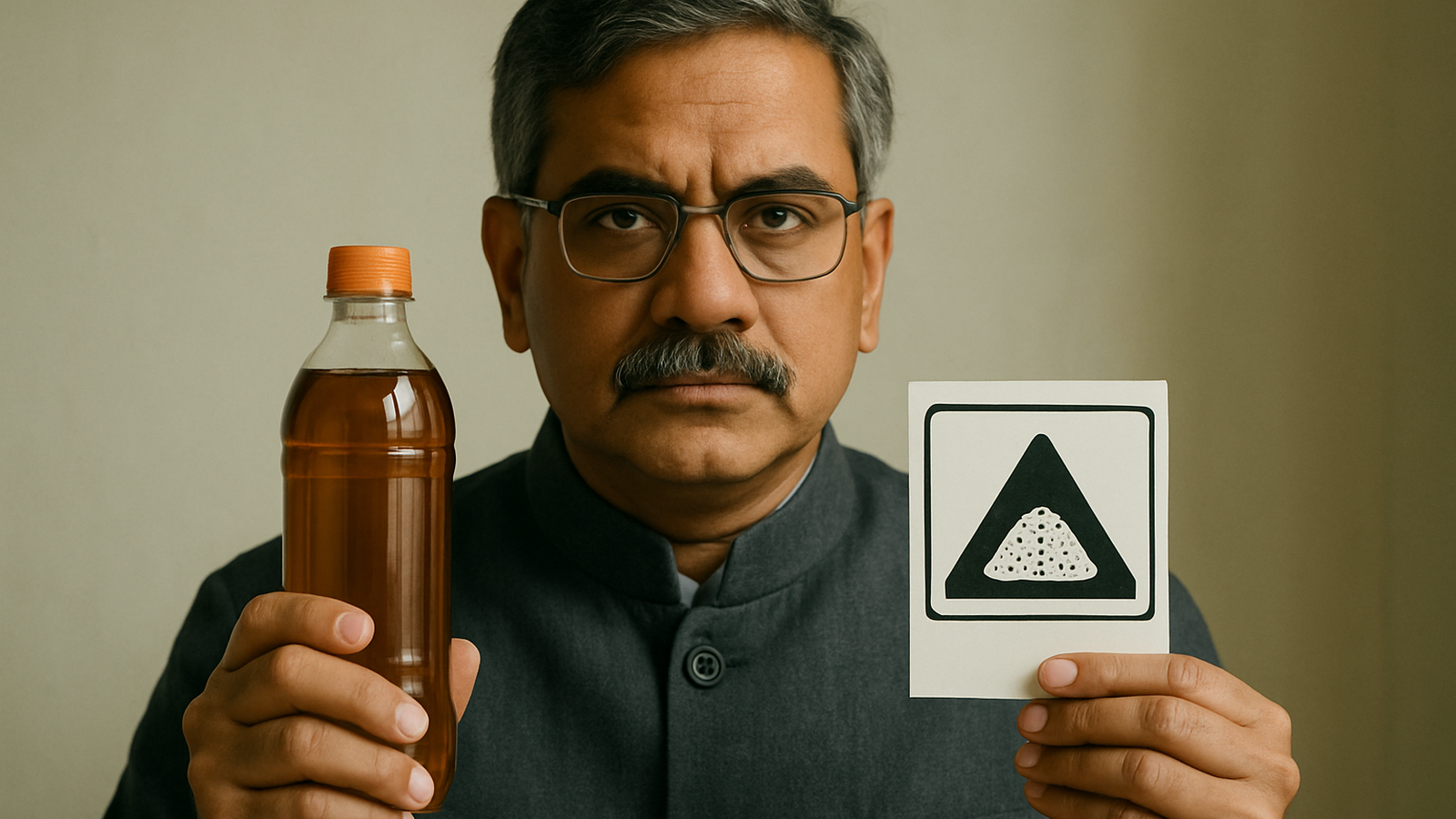
The recommendation exists. The rule does not.
A parliamentary panel has recommended that the Food Safety and Standards Authority of India notify front-of-pack labeling regulations in a time-bound manner. The committee called for stricter food labeling and sugar disclosure norms for packaged foods, aiming to make sugar content more visible to shoppers.
But no regulator has accepted the recommendation, set a deadline, or defined what the labels will look like. FSSAI has not publicly responded with a commitment or implementation timeline. The panel's recommendation is a proposal, not a notified rule. Until FSSAI publishes regulations in the official gazette, packaged foods in India will continue to carry sugar information only on the back-of-pack nutrition table.
What front-of-pack labeling would change—if it happens
Front-of-pack labeling places nutrition information on the most visible part of the package—the front panel shoppers see first. That differs from the current system, in which total sugars and added sugars are disclosed in the nutrition information table printed on the back or side of the pack.
The panel believes front-of-pack labels would improve transparency at the point of purchase. When sugar data sits on the front, shoppers can compare products without flipping packages around. That visibility matters for awareness: many consumers make quick decisions in the aisle and may not check the back panel at all.
Current Indian packaged foods already carry sugar data. The issue is not absence of information—it is the location and prominence of that information.
The details the panel did not supply—and FSSAI has not filled in
The parliamentary recommendation does not specify a label format. Front-of-pack systems vary widely. Some countries use warning symbols—octagons or triangles that flag high sugar. Others use traffic-light color codes—red, amber, green—to rate nutrients. Still others display nutrient scores or percentage-of-daily-value figures on the front.
The panel's recommendation does not define thresholds for what constitutes "high sugar" in a front-of-pack context. It does not explain how compliance would be monitored or enforced. It does not set an implementation timeline or require FSSAI to report back by a specific date.
FSSAI has not filled in these gaps. Without a notified regulation, there is no binding framework, no deadline for manufacturers, and no clarity on what the labels will communicate or how.
How to check sugar content on packs you buy today
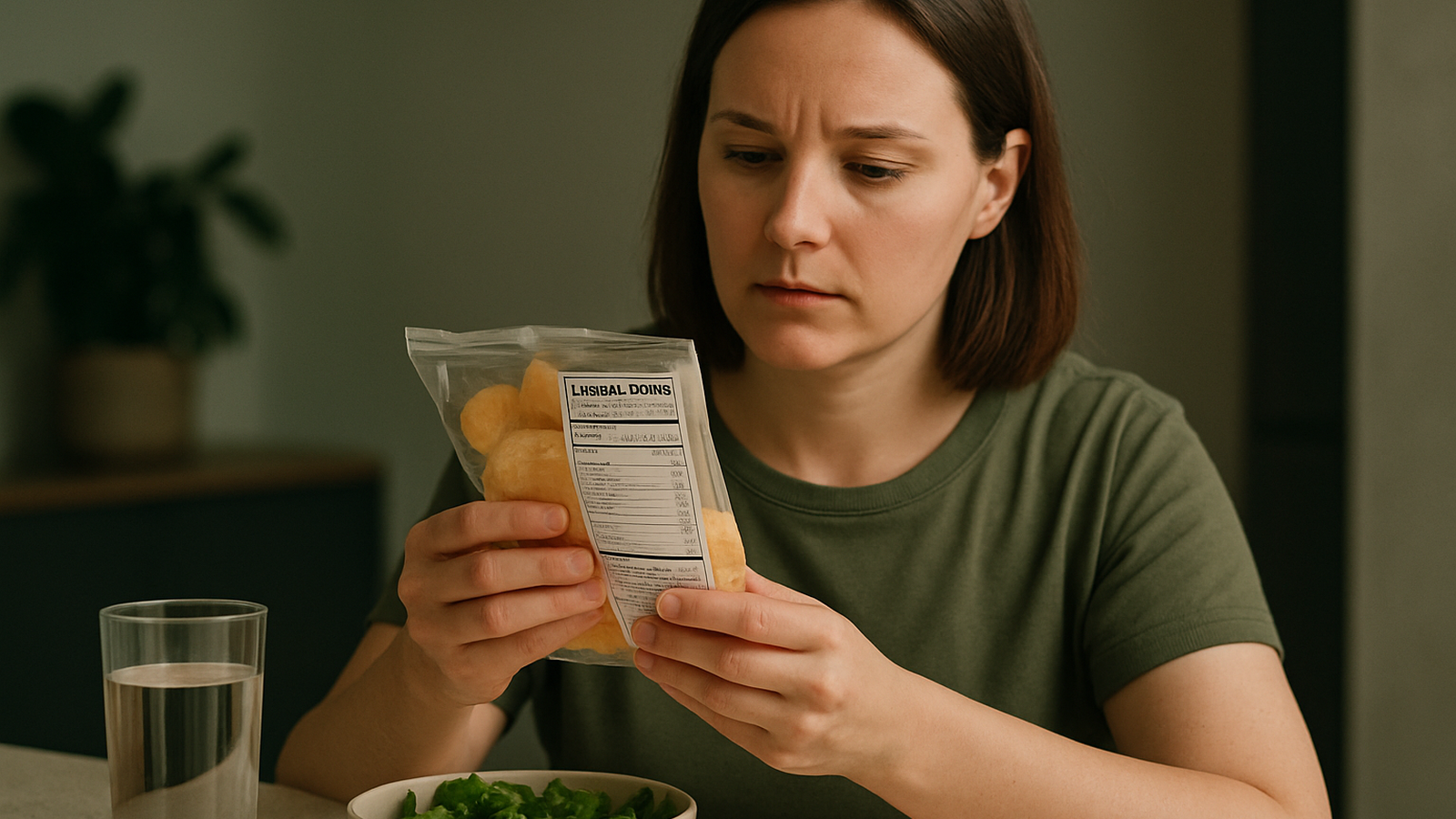
You do not need to wait for front-of-pack labels to check sugar content. Every packaged food in India already carries a nutrition information table, usually on the back or side panel. That table lists total sugars and, for many products, added sugars.
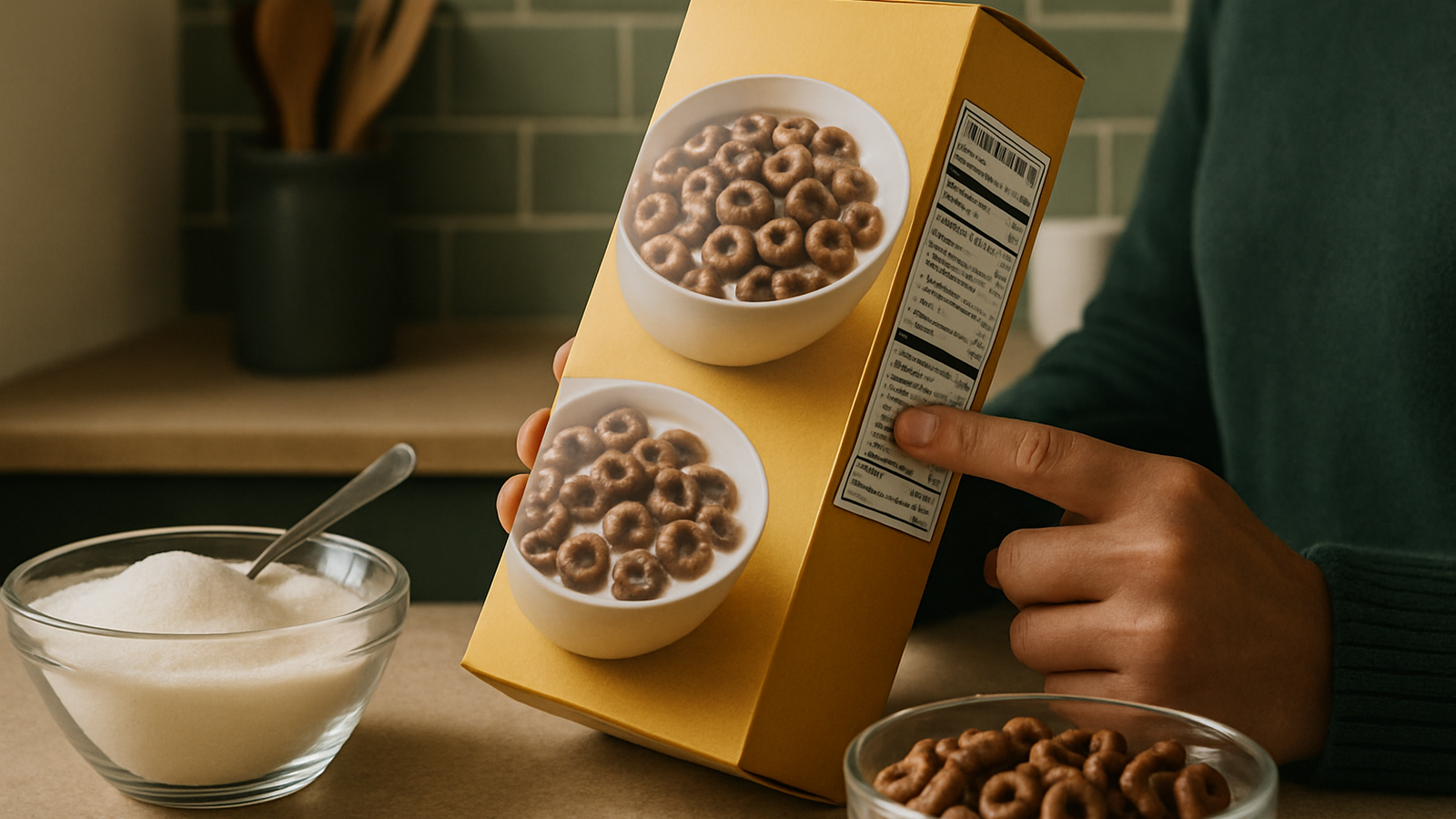
Look for the row labeled "Total Sugars" or "of which Sugars" under carbohydrates. Compare products using the "per 100 g" column—that gives you an apples-to-apples number regardless of pack size. If you want to know how much sugar is in the portion you will actually eat, check the "per serve" column.
A simple decision rule: within the same product category—breakfast cereals, flavored yogurts, biscuits—choose the option with the lower sugar number per 100 g. That information is mandatory and available now. You do not need a new label to make an informed choice.
What this recommendation does not guarantee
A parliamentary recommendation is not a law. FSSAI may adopt the panel's suggestion, modify it, delay it, or decline to act. There is no guarantee that front-of-pack sugar labels will appear on Indian shelves, and no timeline for when they might.
The recommendation does not come with evidence that front-of-pack labeling will reduce sugar consumption or improve public health outcomes. It is a transparency measure, not a proven health intervention. Whether shoppers change their purchases in response to front-of-pack labels depends on behavior, not regulation.
Current packs do not hide sugar information. They disclose it on the back. The panel's concern is visibility and ease of use, not absence of data. If you want to know the sugar content of a product today, the number is there—you just have to turn the package around.
Do not wait for new labels before checking sugar content. The information you need is already in your hand.
Where to watch for updates—if FSSAI moves forward
If FSSAI decides to act on the panel's recommendation, it will publish draft regulations for public comment and, eventually, a final notification in the official gazette. Those documents will appear on FSSAI's website and in government publications.
Panel recommendations do not become law until a regulator notifies them. A news report about a parliamentary committee's suggestion is not the same as a binding rule. To distinguish a recommendation from a notified regulation, look for the official notification number, effective date, and compliance timeline in FSSAI's published orders.
Until you see that notification, the current system remains in place. The back-of-pack nutrition table is still the only mandatory disclosure. Front-of-pack sugar labels are a possibility, not a policy—and shoppers who want to check sugar content have the tools to do so right now.
Sugar content in common packaged foods (check the back panel now)
Comparison basis: Per 100 g or 100 ml as shown on nutrition table
| Food / drink | Total sugars per 100 g | What to look for on pack | Quick comparison tip |
|---|---|---|---|
| Breakfast cereal (sweetened) | ~25–40 g | "Total Sugars" row under carbohydrates | Compare brands—some have half the sugar |
| Flavored yogurt | ~12–18 g | Check "of which Sugars" line | Plain yogurt has ~5 g; add your own fruit |
| Biscuits (sweet) | ~20–35 g | Per 100 g column for fair comparison | Marie biscuits typically lower than cream-filled |
| Packaged fruit juice | ~10–12 g | Natural fruit sugars—still count as total | Whole fruit gives fiber; juice does not |
| Flavored milk drink | ~8–12 g | Added sugars listed separately if disclosed | Plain milk has ~5 g lactose, no added sugar |
| Tomato ketchup | ~20–25 g | Condiments hide sugar—check per serve too | Use sparingly; 1 tbsp = ~4 g sugar |
| Energy/sports drink | ~6–8 g per 100 ml | Multiply by bottle size (often 500 ml) | Water for hydration; these are sugar sources |
Values are approximate and vary by brand, recipe, and formulation. Always check the nutrition information table on the specific product you buy.







Comments
No login needed. Keep it kind — abusive language is filtered.