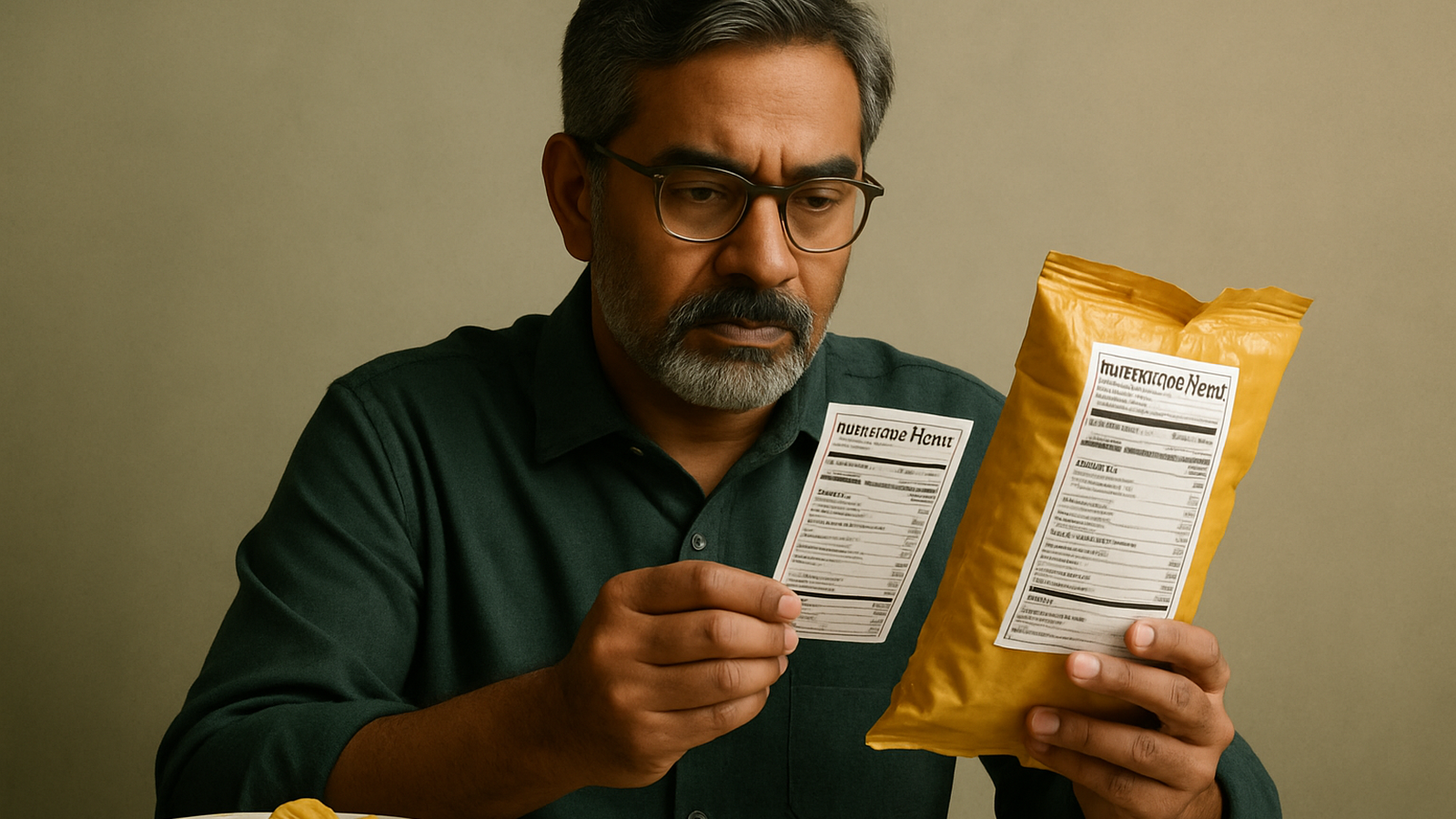
You're standing in the cereal aisle. The box in your hand says "wholesome," "natural," "made with whole grains." But you're not sure what any of that actually means—or whether it matches what's inside. The front of the package is designed to sell. The back of the package is required to tell.
That's the gap label literacy bridges. And it starts with three lines you can read in under thirty seconds: the first three ingredients, the nutrition facts panel, and the ingredient list order itself. These are regulated disclosures, not marketing language. They answer the question the front of the pack avoids: what is this product mostly made of?
Why ingredient rank comes before the health claims
Ingredients must be listed in descending order by weight. That's a regulatory requirement enforced by the FDA. The first ingredient is present in the greatest amount. The second ingredient comes next. The third follows. This ordering rule applies across every category of packaged food—cereal, snacks, condiments, frozen meals, beverages.
Front-of-pack claims like "natural," "wholesome," or "lightly sweetened" lack uniform regulatory definitions. A product can call itself "lightly sweetened" while listing sugar as the second ingredient. It can highlight "made with whole grains" on the front while whole grain flour appears fifth on the ingredient list, after refined flour, sugar, and oil.
The ingredient list is verifiable. The front of the pack is promotional. When you need to know what's actually inside, start with the part of the label that's required to be accurate by weight.
The first three ingredients reveal the product's foundation
The first three ingredients listed on a nutrition label are generally the most significant components by weight. They represent the bulk of the product. If you read only three lines, read these.
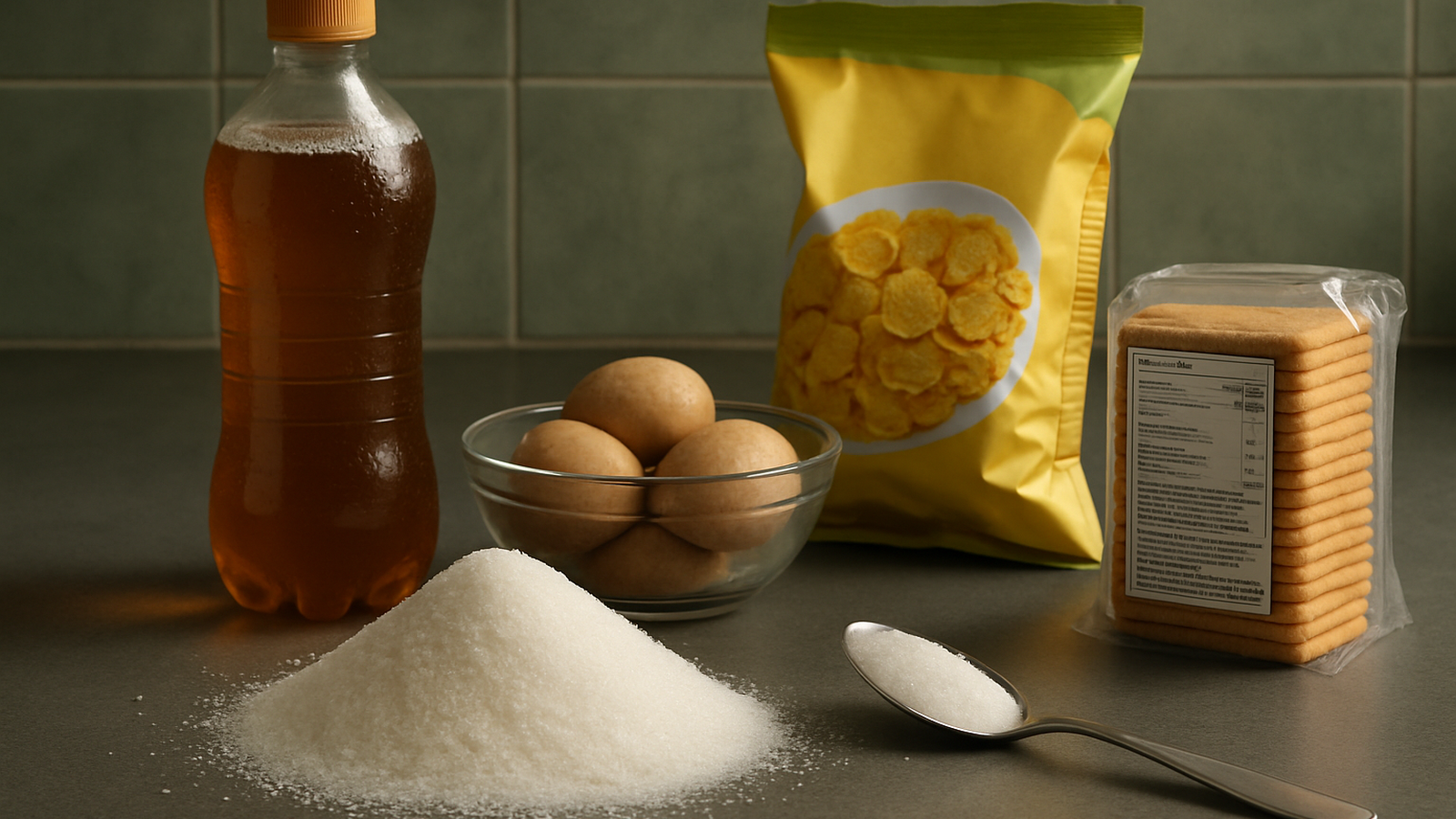
If sugar—or a sugar synonym like cane syrup, corn syrup, dextrose, or fruit juice concentrate—appears in the top three, it's a core component of the product, not an accent. If refined flour appears first and whole grain flour appears fourth, you're buying a product that is mostly refined flour, regardless of what the package emphasizes.
This check works in the aisle. No app. No calculation. No memorization required. You flip the package, read the first three ingredients, and ask: do they match what I thought I was buying?
The nutrition facts panel: where sugar, sodium, and saturated fat live
The "Nutrition Facts" panel format is mandated by the FDA and consistent across products. This is where added sugars, sodium, and saturated fat appear—the three nutrients public health guidance consistently flags for moderation.
Each nutrient is listed in grams and as a percentage of Daily Value. The % Daily Value tells you how much of a day's worth of that nutrient one serving provides, based on a standard diet. Five percent or less is considered low. Twenty percent or more is considered high. This is FDA guidance, and it gives you a comparison tool.
If one granola bar has 15% Daily Value for added sugar and another has 8%, you can see the difference at a glance. If a frozen meal delivers 35% of your daily sodium in one serving, you know that's a significant portion of your day's intake.
Serving size matters. Check whether the "per serving" amount matches how much you'll actually eat. A bottle of iced tea might list 10 grams of sugar per serving—but if the bottle contains two and a half servings, you're looking at 25 grams if you drink the whole thing.
What front-of-pack claims don't have to tell you
Terms like "lightly sweetened," "made with whole grains," or "natural" can coexist with high sugar, high sodium, or minimal whole grain content. They are not defined by regulation in a way that limits their use.
A product can highlight one "good" ingredient on the front—say, oats or fruit—while the ingredient list shows that ingredient is the fourth or fifth component by weight. The front of the pack is allowed to emphasize what it wants to emphasize. The ingredient list and nutrition facts panel are required disclosures.
This is not to say all front-of-pack language is false. It's to say it's selective. The facts panel and ingredient list show the whole picture. The front of the pack shows the angle the brand wants you to see first.
How to use this in the aisle—without slowing down your shop
This is a repeatable, three-step routine you can execute in under thirty seconds per product.
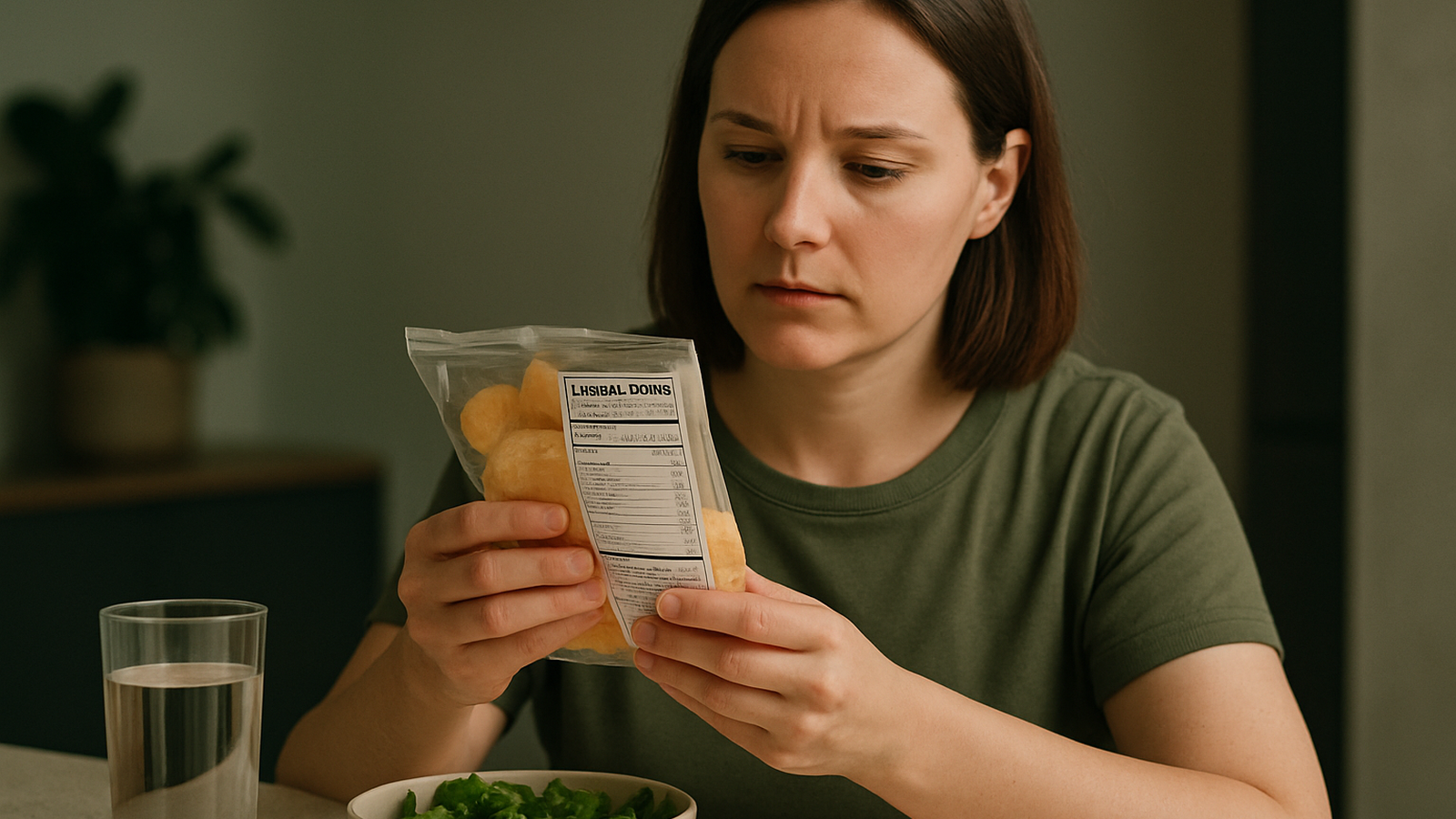
Step one: Flip the package. Read the first three ingredients. Do they match what you thought you were buying? If the front of the pack says "berry blast" and the first three ingredients are water, sugar, and corn syrup, you know berries are not the foundation of the product.
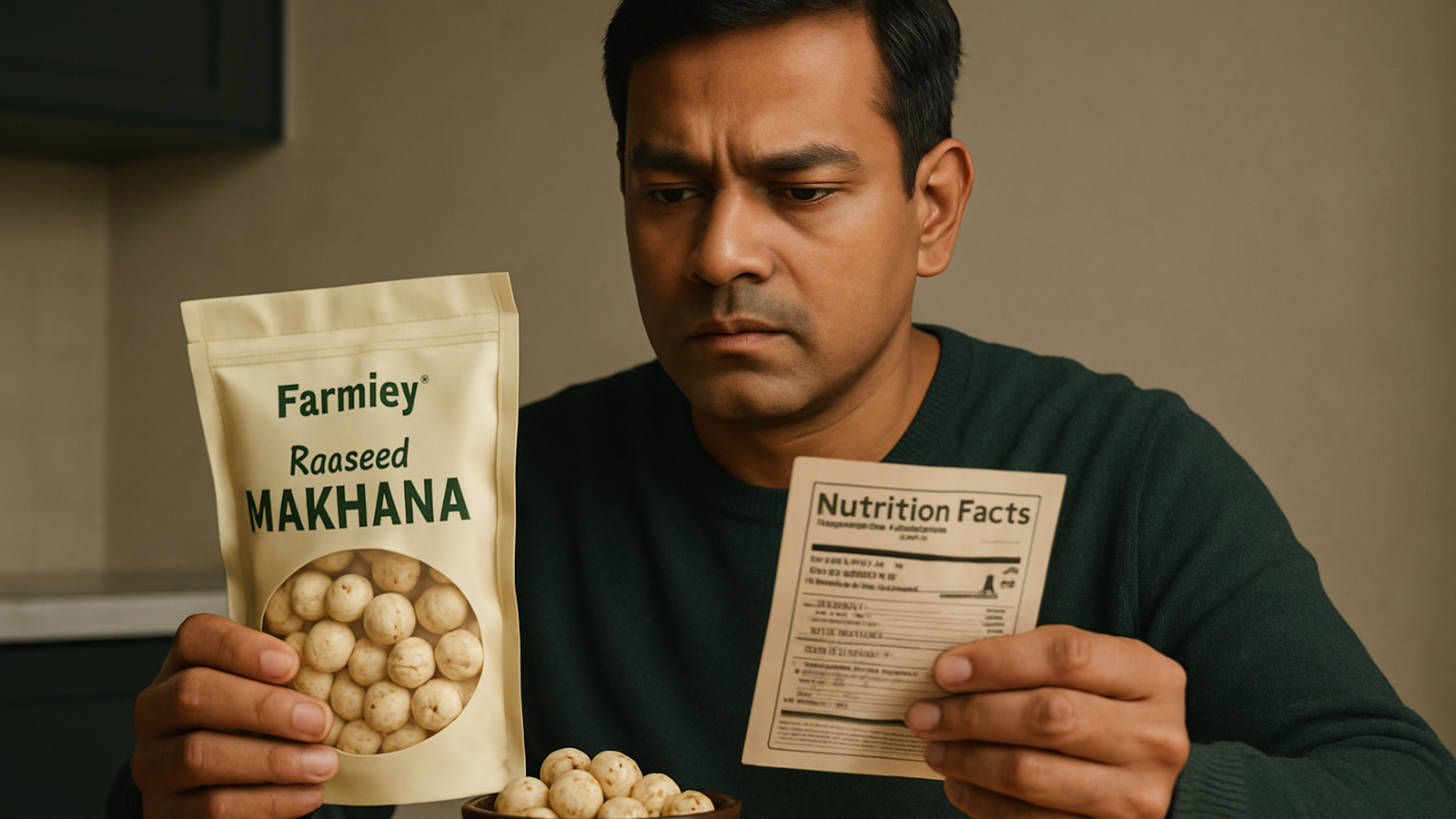
Step two: Scan the nutrition facts panel for added sugar, sodium, and saturated fat. Look at the % Daily Value. If you're choosing between two brands, compare these numbers directly. Five percent or less is low. Twenty percent or more is high.
Step three: Ignore the front of the pack until you've checked the back. Let the ingredient list and facts panel inform your interpretation of the marketing language, not the other way around.
This sequence works for any packaged food—from breakfast cereal to frozen meals to snack bars. The more you practice, the faster it becomes.
What this label habit will not do
Reading labels does not guarantee health outcomes or prevent diet-related disease on its own. Label literacy is one tool in a larger dietary context. It helps you see what's inside a package. It does not tell you whether that food fits your specific health needs, your preferences, or your overall eating pattern.
This skill does not replace attention to how much you eat or the overall balance of your diet. A product low in added sugar can still be high in calories or sodium. A product with whole grains as the first ingredient can still be part of a diet that lacks vegetables, fruit, or adequate protein.
Label literacy helps you make more informed purchase decisions. It does not solve portion awareness. It does not replace the need to consider your diet as a whole.
Regulatory advocacy and public awareness campaigns—like those led by the FSSAI in India, NAFDAC in Nigeria, and ongoing FDA guidance in the United States—show growing attention to label transparency. Advocates like Revant Himatsingka, known as "Food Pharmer," educate consumers on decoding food labels and identifying misleading marketing in packaged goods. But these efforts do not indicate universal reformulation by manufacturers or immediate changes to product formulations across markets.
If you're standing in the aisle right now
Pick up a product you buy regularly. Flip it over. Read the first three ingredients. Do they surprise you?
Compare two similar products using the % Daily Value for added sugar and sodium on the facts panel. Which one delivers less of each per serving?
If the front of the pack makes a health claim—"wholesome," "natural," "made with real fruit"—check whether the ingredient list and facts panel support it. Does the ingredient list show fruit in the top three? Does the facts panel show low added sugar?
This is a habit, not a one-time audit. The more you practice, the faster it becomes. And the clearer the gap between marketing and disclosure will appear—every time you turn a package around.
Added sugar in common packaged foods: what one serving delivers
Comparison basis: Typical single serving as listed on package
| Food / drink | Added sugar per serving | % Daily Value | Label clue |
|---|---|---|---|
| Flavoured yogurt (170 g) | ~15–20 g | ~30–40% | Sugar often 2nd or 3rd ingredient |
| Granola bar (40 g) | ~8–12 g | ~16–24% | Check for syrups in top 3 |
| Breakfast cereal (30 g) | ~10–15 g | ~20–30% | Sugar may appear multiple times |
| Bottled iced tea (500 ml) | ~20–25 g | ~40–50% | Check servings per bottle |
| Tomato pasta sauce (125 ml) | ~6–10 g | ~12–20% | Sugar balances acidity |
| Protein bar (60 g) | ~10–18 g | ~20–36% | Syrups, dextrose often in top 3 |
Values are approximate and vary by brand, recipe, and serving size. Check the Nutrition Facts panel and ingredient list for your specific product.








Comments
No login needed. Keep it kind — abusive language is filtered.