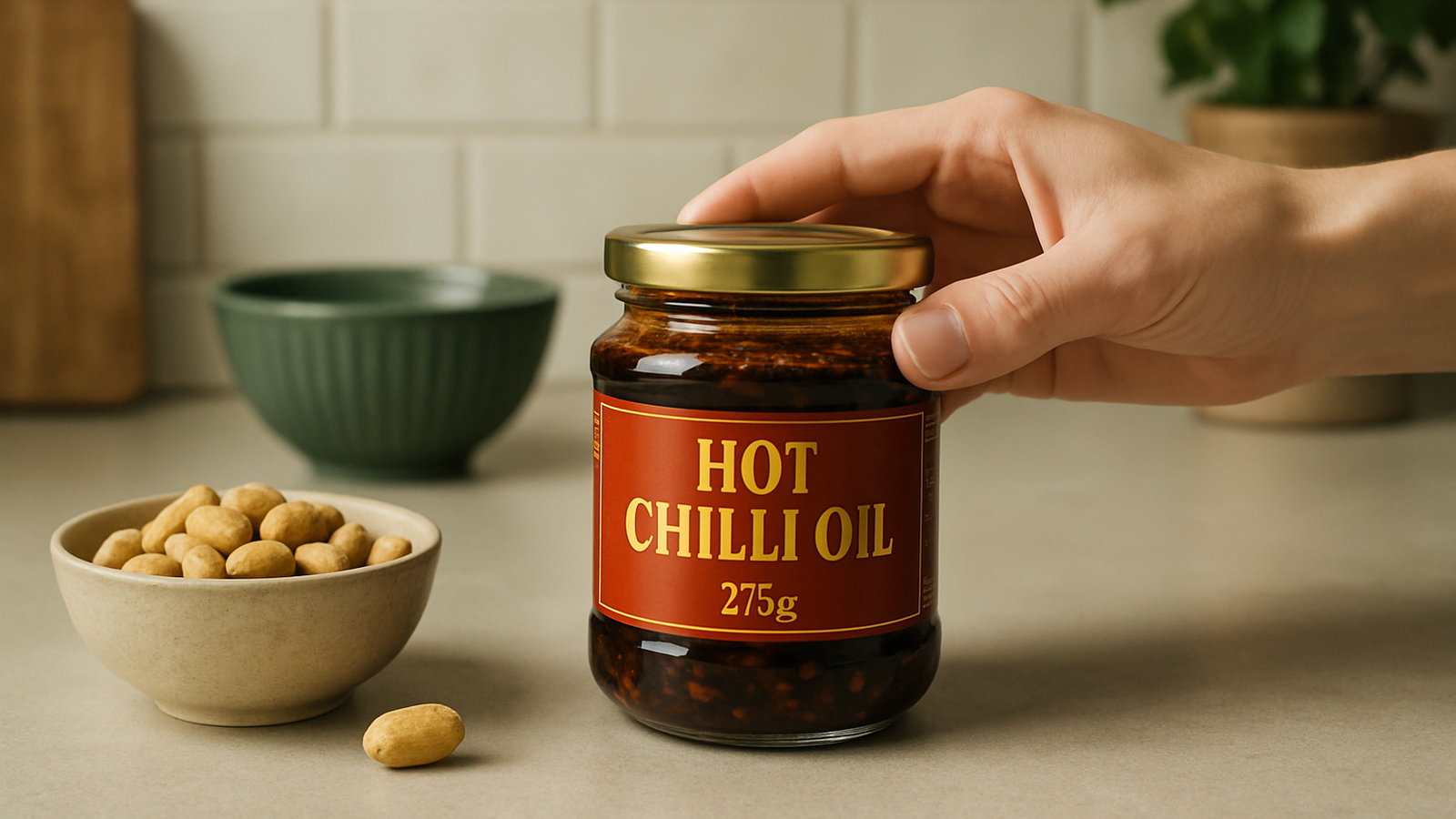
LGM Hot Chilli Oil in the 275-gram pack size is being recalled because peanuts were missing from the allergen label. The product contains peanuts, but the label gave no warning—a failure that creates immediate risk for anyone with a peanut allergy who bought this jar and assumed it was safe to use.
Peanut allergies can trigger severe, life-threatening reactions. When an allergen label omits a major ingredient like peanuts, households lose the one tool regulators require manufacturers to provide: clear, upfront disclosure of what's inside.
What you need to identify the pack—and what's still missing
If you shop for yourself or someone with a peanut allergy, check your cupboard for LGM Hot Chilli Oil in the 275-gram size. That pack size is the subject of this recall.
What is not yet available in published notices: batch numbers, expiration dates, the list of retailers that sold the product, or the geographic scope of the recall. Without those details, you cannot rule out a 275-gram jar based on its date code or where you bought it. For now, the safest approach is to treat any 275-gram pack of LGM Hot Chilli Oil as potentially affected until official guidance narrows the scope.
Other LGM products are not mentioned in the recall. Only the 275-gram Hot Chilli Oil is implicated at this time.
Check official food safety authority websites and retailer recall pages for updates. As batch numbers and retailer lists become available, those sources will publish the specific identifiers you need to confirm whether your jar is part of the recall.
Why a missing allergen label is a regulatory failure—and a household hazard
Allergen labeling requirements exist because even trace amounts of certain foods can trigger severe reactions in sensitive individuals. Peanuts are classified as a major allergen precisely because of their potential to cause anaphylaxis, a rapid and sometimes fatal immune response.
Regulations require manufacturers to declare major allergens on every package. The label is the primary safeguard: it allows allergic consumers to make informed decisions before a product enters their home.
When that system breaks down—when peanuts are present but not declared—the consequence is not abstract. A household that relies on allergen labels to stay safe loses the ability to screen out dangerous foods. Someone reaches for a jar they believe is safe, and the ingredient that could harm them is already on the shelf.
Cross-contact adds another layer of risk. Even if you do not have a peanut allergy, using this oil in a shared kitchen—on utensils, cutting boards, or cookware that others will use—can transfer peanut protein to foods prepared later. That makes the recall relevant to anyone who cooks for or shares a kitchen with a peanut-allergic person.
If you have this pack at home
Do not consume LGM Hot Chilli Oil in the 275-gram size if you or anyone in your household has a peanut allergy. Return the product to the point of purchase for a refund, or discard it in a way that prevents accidental use.
If you have already used the oil and have no peanut allergy, no action is needed for your own safety. But consider whether the oil may have come into contact with surfaces, utensils, or containers that others in your household will use. If cross-contact is possible, clean those items thoroughly or discard the oil to eliminate the risk.
As batch-specific guidance becomes available, check official recall notices to confirm whether your jar falls within the affected lot. Until that information is published, treat all 275-gram packs as recalled.
What this recall does not establish
This recall addresses a single product: LGM Hot Chilli Oil in the 275-gram size. It does not indicate that all LGM products are affected. No evidence of a pattern of allergen labeling failures at LGM has been presented in available notices.
For consumers without peanut allergies, the oil itself is not unsafe. The recall exists because the label failed to disclose an ingredient that poses risk to a specific population.
This article does not provide medical advice. If you or someone in your household has consumed the product and experiences symptoms of an allergic reaction, seek emergency medical care. Do not rely on general guidance to assess your situation.
Where to find updates as details emerge
Official food safety authority websites will publish batch numbers, expiration dates, and retailer lists as that information becomes available. Retailer recall pages may also post specific guidance for products sold through their stores.
If LGM issues a company statement with additional details, that communication may clarify the scope of the recall or provide direct contact information for consumer inquiries.
Check those sources regularly if you own a 275-gram jar and need confirmation of whether your specific pack is affected. Until batch identifiers are published, the safest course is to assume any 275-gram pack of LGM Hot Chilli Oil may be part of the recall.
Major food allergens: common sources and label requirements
Comparison basis: Presence/absence in product, not quantity
| Allergen | Common hidden sources | Label clue | Cross-contact risk |
|---|---|---|---|
| Peanuts | Chilli oils, satay sauces, baked goods, Asian dressings | May contain peanuts / groundnuts | High—protein transfers easily via utensils |
| Tree nuts | Pesto, nut oils, granola, dairy alternatives, desserts | May contain almonds / cashews / walnuts | High—fragments persist on surfaces |
| Milk | Chocolate, baked goods, processed meats, margarine, crisps | Contains milk / whey / casein / lactose | Moderate—residue on cookware |
| Eggs | Pasta, mayonnaise, baked goods, marshmallows, some wines | Contains egg / albumin / lecithin (if egg-derived) | Moderate—cooked residue on pans |
| Soy | Vegetable oil, processed foods, meat alternatives, chocolate | Contains soya / soy lecithin | Low to moderate—widespread use |
| Wheat | Bread, pasta, sauces, soups, processed meats, beer | Contains wheat / gluten (if from wheat) | Moderate—flour dust spreads |
| Fish | Worcestershire sauce, Caesar dressing, some Asian sauces | Contains fish / anchovies | High—odour and protein linger |
| Shellfish | Fish sauce, surimi, some Asian broths, paella | Contains crustaceans / molluscs | High—protein transfers via cookware |
Allergen presence must be declared regardless of amount. 'May contain' warnings indicate cross-contact risk during manufacturing. Always read labels before purchase if you have allergies.














Comments
No login needed. Keep it kind — abusive language is filtered.